What you'll read about matcha, and what's in ours.
A one-line answer to each, if you only want to drink it; the detail and sources under it, if you want more. Each answer ends at our own four teas: two blends and two single cultivars, three stone-milled and one bead-milled; Hitoiki, Yoi and Hidamari are milled in November.

Our four teas, one line each
| Tea | Made for | Leaf | Picked | Rested | Mill |
|---|---|---|---|---|---|
| Hitoiki一息 | Just water: koicha and usucha | The farm's house blend of its cultivars, a family secret | First flush | As leaf, until November | Stone mill 茶臼 |
| Yoi宵 | Water, or milk without sugar | Okumidori, a single cultivar | First flush, May | As leaf, May to November | Stone mill 茶臼 |
| Hidamari陽だまり | Sweetened milk, and cocktails | Yabukita, a single cultivar | First flush, May | As leaf, May to November | Stone mill 茶臼 |
| Akebono曙 | Sweetened drinks, and the kitchen | A blend of the farm's cultivars, a family secret | Spring and autumn | — | Bead mill |
All four grow at Nakai Seichajō, Wazuka, Kyōto, and are shaded before picking: Hitoiki over 21 days; Yoi, Hidamari and Akebono over 21 days, the farm says. Hitoiki, Yoi and Hidamari are milled in November.
What makes it matcha?
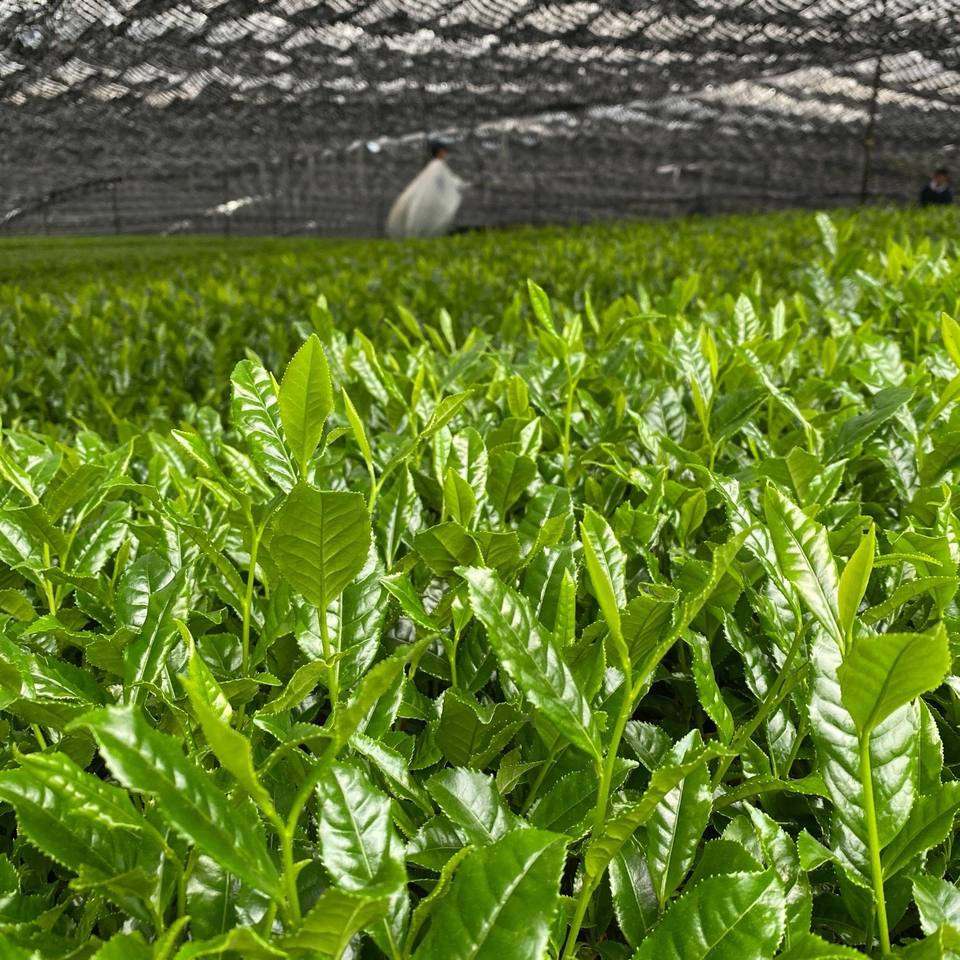
Shaded leaf, steamed, dried unrolled and ground fine. In Japan, ground ordinary green tea is “powdered tea”, not matcha.
Japan's tea-industry labelling standard defines matcha as tencha 碾茶, leaf grown under shade and dried without rolling, ground to a fine powder “with a tea stone mill or similar”1. The fields are covered for about two to three weeks before picking, with reed screens, straw mats or cloth, and the leaf is steamed, then dried1.
Ground sencha and other unshaded tea fall in a separate category, 粉末茶, powdered tea1. The standard is voluntary and covers tea sold in Japan; it does not bind sellers elsewhere.
OursAll four are shaded before picking, at Nakai Seichajō in Wazuka, Kyōto: Hitoiki for over 21 days, and the farm gives the same for Yoi, Hidamari and Akebono.
What do “ceremonial grade” and “culinary grade” mean?
English labels; no Japanese standard uses them. Japan sorts matcha by use and by leaf: thick tea, thin tea, food.
Japan's tea-industry labelling standard defines kinds of tea, not grades, and it never uses “ceremonial” or “culinary”1. ISO's classification of tea types sets no grades either2.
In the Way of Tea, koicha 濃茶, thick, and usucha 薄茶, thin, differ by the quality of the tea3. Since 2020 the standard calls autumn tencha “food-processing tencha”, for use as an ingredient1. Kyōto's tea institute read this as barring unshaded autumn leaf from matcha, and in 2020 expected growers to start shading autumn shoots so they would still count4.
OursNo grade words: we say what each tea is for. Hitoiki is the one for koicha; Akebono, partly autumn leaf, is for sweetened drinks and the kitchen.
Blend or single cultivar?
Named cultivars 1978 the year they passed half of Japan's tea fields.
Different, not better or worse. Blending is old in Uji; cultivars, and selling tea by them, are recent.
In Uji, blending, 合組 gōgumi, is how a named tea stays the same: one garden yields little, and taste changes from garden to garden and year to year5.
But old Uji fields were seed-grown native bushes; named cultivars passed half of Japan's tea fields only in 19786. Selling tea by cultivar is newer: in 2005 Japan's national research body called it recent7. We found no public or research source that ranks either above the other. And one cultivar is not one field: it can be several lots together.
OursTwo of each. Hitoiki and Akebono blend the farm's cultivars, a choice the family keeps to itself; Yoi is Okumidori and Hidamari is Yabukita, single cultivars.
Why are ours milled in November?
The leaf rests unmilled through summer first, as tea people have long done. November opens the tea year.
Tea people sealed the spring leaf in a jar, kept it cool and dark over summer for more umami, then in early November cut the seal and ground it in a stone mill89: 口切 kuchikiri, the start of the tea year8.
In a Japanese study, matcha from tencha rested six months at 10 °C had more umami and sweetness, and less bitterness and astringency, than from unrested leaf; why is still open10. Kyōto's tea institute found shaded leaf kept at 5 °C matures in about six months11. Both kept the leaf cold.
OursYoi and Hidamari rest as leaf from May, Hitoiki from its spring picking; Akebono is partly autumn leaf. Hitoiki, Yoi and Hidamari are milled in November.
The year in a tin · Hitoiki, Yoi, Hidamari
Picked in spring
First flush, from shaded bushes at Nakai Seichajō in Wazuka; May for Yoi and Hidamari.
Rests through summer
As leaf, unmilled, from May to November.
Milled in November
In a stone mill 茶臼, in the month of 口切 kuchikiri.
Opened by you
Opened, it changes faster than in the sealed tin. Keep it airtight, cool and dark, and use it within a few weeks.
Isn't fresher better?
New-season matcha is a different style, not a better one. Once milled, matcha slowly changes; once opened, faster.
Uji houses also sell new-season matcha from unrested spring leaf, mid-May to July: greener in aroma, lighter in taste.
Cold leaf changes slowly: tencha held six months at 5 °C kept its colour12. Powder is another matter: in one study, packed matcha lost green at every temperature tested, faster when warmer13. For stored leaf tea, Kyōto's tea institute found damp does the most harm14. Once opened, tea houses say, finish a pack within about two weeks in summer, a month in winter. From the fridge, let it reach room temperature before opening.
OursHitoiki, Yoi and Hidamari are milled in November. The best-before date is on each tin. Sealed and kept cool and dark, a tin changes slowly; once opened, faster, so finish it within a few weeks.
Does greener mean better?
Green tells you something, not everything. Japan's judges give looks and colour 70 of 200 points; aroma and taste 130.
Shading raises chlorophyll, so shaded leaf comes out a deeper green15; later pickings come out less green16. Kyōto's tea institute calls a vivid colour, 冴え sae, the most important item in judging tencha17.
Yet at Japan's national competition, tencha gets 70 of 200 points for looks and colour, and 130 for aroma and taste18. Darkest is not automatically best: judges mark a blackish cast as a fault19, and Kyōto devised a covering method to reduce one19. Heat and light also fade matcha20, so colour alone is no sure test.
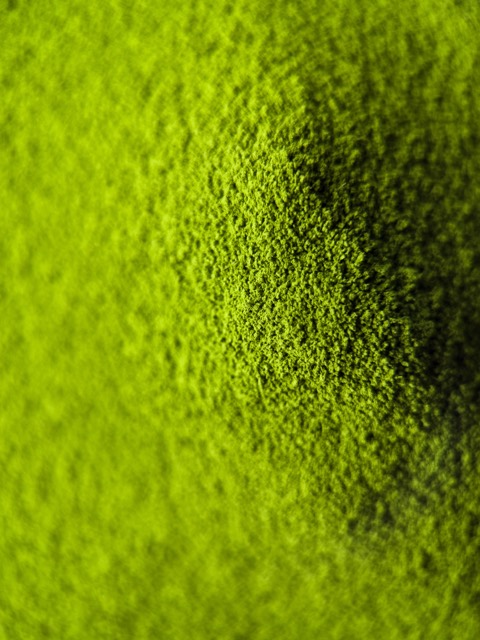
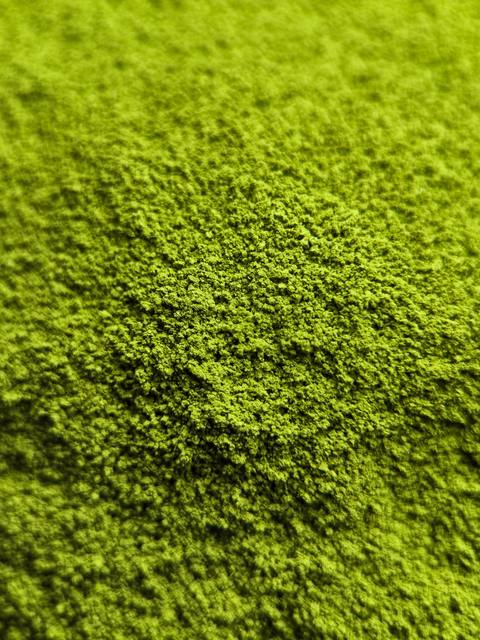
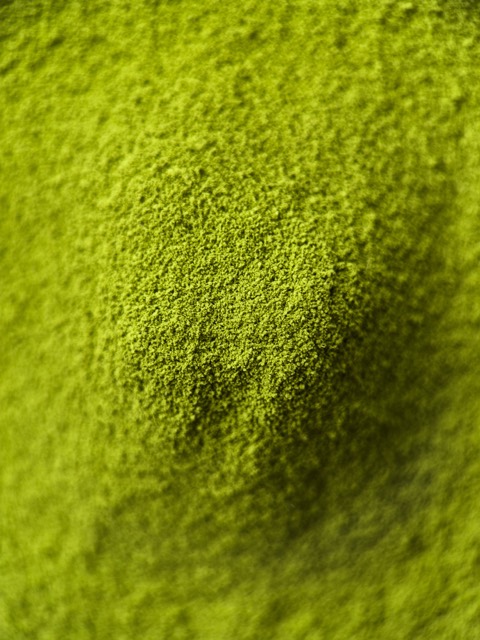
OursBy our photographs, the four run from green to yellow: Hitoiki, then Yoi and Hidamari, then Akebono. The order follows what each is for: water first, sweetened drinks last.
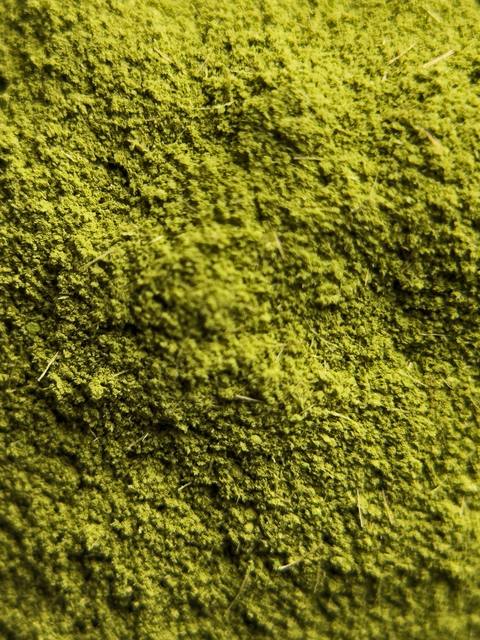
Stone mill or machine?
Stone is the reference, not the only way. A machine mill makes a different powder.
Japan's tea-industry standard allows “a tea stone mill or similar”: machines that work like one1. Tea makers put a traditional stone mill at about 40 g an hour.
A stone mill warms as it grinds: in Kyōto's test, to about 50 °C after eight hours, and matcha from the warmer mill scored better21. In a small 2022 study, three powders, one per mill (stone, bead, cyclone), differed in particle size, taste compounds and aroma22.
OursHitoiki, Yoi and Hidamari are stone-milled. Akebono is bead-milled, by machine. It is our stronger tea, for sweetened drinks and the kitchen.
Should matcha taste bitter?

A little, in balance. In our water teas it comes first, light, and gives way to umami and sweetness.
With matcha you drink the whole leaf, bitter compounds and all: caffeine, and gallated catechins such as EGCG23. Shading raises caffeine rather than lowering it, and raises theanine too15, an amino acid that tastes sweet and adds to umami2324.
Bitterness is a taste; astringency is a drying, puckering feel25. Later-picked, harder leaf leans to both1816. Judging sencha, Japan's national competition wants sweetness, astringency, bitterness and umami in harmony, and marks bitterness down only when it stands out18.
OursIn Hitoiki and Yoi the bitterness is light and gives way to umami. Akebono is the stronger, more bitter one: that is what holds it against milk and sugar.
What does “Uji” on a tin mean?
A region and a way of finishing, not one city's fields: leaf from four prefectures can be Uji tea.
In the definition of Kyōto's tea industry body, Uji tea is green tea from leaf grown in Kyōto, Nara, Shiga or Mie, finished in Kyōto Prefecture by Kyōto firms using Uji-area methods26, with Kyōto-grown leaf given priority34; we found no fixed share.
So “Uji” on a tin does not mean the leaf grew in Uji city. Japan's largest tencha producer today is Kagoshima; Kyōto is second27.
OursAll four of ours grow at Nakai Seichajō in Wazuka, Kyōto. Hitoshizuku, coming in 2027, is from a family garden in Uji city.
What about health claims?
We make none. The EU has authorised no health claim for green tea, matcha, tea catechins or theanine.
As a rule, a health claim on food in the EU needs authorisation28. The EU register lists none authorised for green tea, matcha, tea catechins or theanine29.
In the opinions linked here, EFSA, the EU's food-safety body, found that none of the effects it assessed for green-tea catechins, or for theanine from tea, had been established303132. So this page, like our tea pages, says nothing about what matcha does in the body.
OursWe sell it for the taste. One caution: you drink the whole leaf, so a bowl carries real caffeine; if you skip coffee late in the day, skip matcha too.
Yuki Okamoto
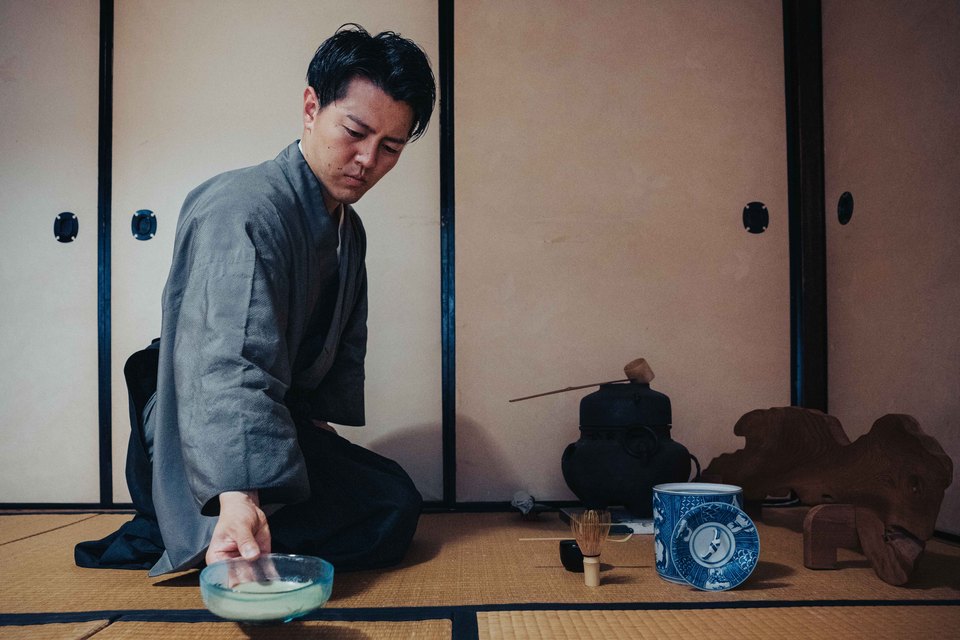
We work together, between Kyōto and Berlin. Yuki supports us in choosing matcha.
Chabana 茶花
Chabana are the flowers of the tea room: a simple arrangement for its alcove, the tokonoma, set loosely in the vase rather than shaped33. They follow the season: in the warm months several flowers and grasses together, in the cold months often a single flower, such as a camellia. A saying attributed to Sen no Rikyū asks for flowers as they are in the field33.
Where the answers come from
Public and standards bodies, a tea school, reference works and published research only. Where only tea houses say something, we describe the practice and give no link. Most links open Japanese documents.
- Japan Tea Central Association: green tea labelling standard (緑茶の表示基準)
- ISO 20715:2023, Tea: classification of tea types
- Kotobank: 薄茶 usucha (Nipponica encyclopedia)
- Kyōto Prefectural Tea Research Institute: monthly report, Oct 2020 (autumn tencha under the revised standard)
- Kyōto Prefecture: Uji tea heritage paper, 2013 (why Uji blends)
- Kyōto Prefectural Tea Research Institute: the history of tea cultivar breeding
- NARO: green tea cultivar identification manual, 2005
- Kotobank: 口切 kuchikiri (Nihon Kokugo Daijiten; Heibonsha encyclopedia)
- Omotesenke: 口切り kuchikiri
- KAKEN 09680031: why tencha must rest for matcha's flavour (Yamaguchi Prefectural University, 1997–99)
- Kyōto Prefectural Tea Research Institute: shaded tea matures in about six months
- KAKEN 09680031: 1999 report (leaf quality in cold storage)
- Liu et al., Food Science 41(3), 2020: matcha stored at −18 to 37 °C
- Kyōto Prefectural Tea Research Institute: monthly report, Feb 2022 (moisture and stored tea)
- Sano et al. (NARO), J Sci Food Agric 98, 2018: shading and the new shoots
- Mie Prefecture tea extension: covering second-flush shoots (二番茶芽の被覆), 2009
- Kyōto Prefectural Tea Research Institute: judging tencha's colour, 冴え sae
- Yamaguchi (NARO), 2006: national tea competition scoring and judging terms
- Kyōto Prefectural Tea Research Institute: a covering method against a blackish cast
- Mie Industrial Research Institute, Report 37, 2013: light and matcha colour
- Kyōto Prefectural Tea Research Institute: stone-mill temperature and matcha quality
- Huang et al., Food Chemistry 372, 2022: cyclone, bead and stone milling of matcha
- Nakagawa, JARQ 5(3), 1970: tea leaf constituents and the taste of green tea
- Kaneko et al., J Agric Food Chem 54, 2006: the umami taste of Japanese green tea
- Kotobank: 渋 astringency (Nipponica encyclopedia)
- MAFF: Uji tea (うちの郷土料理: 宇治茶)
- MAFF: お茶をめぐる情勢 (the state of Japanese tea), Oct 2026
- Regulation (EC) No 1924/2006, Article 10 (text as adopted)
- EU Register of nutrition and health claims
- EFSA Journal 2011;9(6):2238: claims for L-theanine
- EFSA Journal 2010;8(10):1791: claims for green tea catechins
- EFSA Journal 2011;9(4):2055: further claims for green tea catechins
- Kotobank: 茶花 chabana (Digital Daijisen; Nihon Kokugo Daijiten; Nipponica encyclopedia)
- Kyōto Prefectural Assembly: on the Uji-tea ordinance (宇治茶条例の考え方)
Taste before you choose.
We pour all four at the bar: Kopenhagener Str. 16, Berlin, Wed–Sun 14:00–18:00. Ask for any of them, and one of us whisks it in front of you.