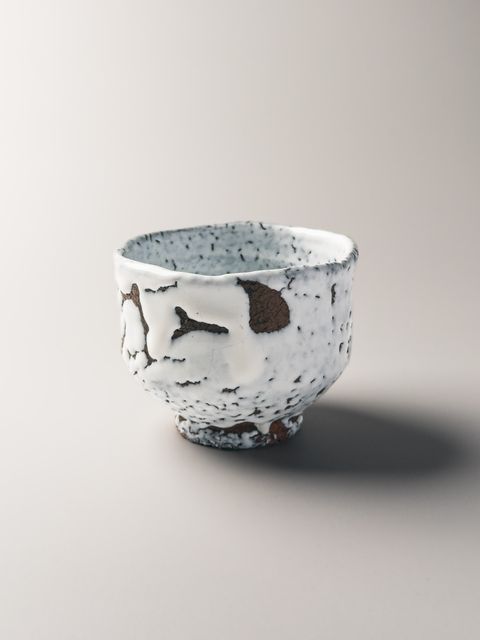
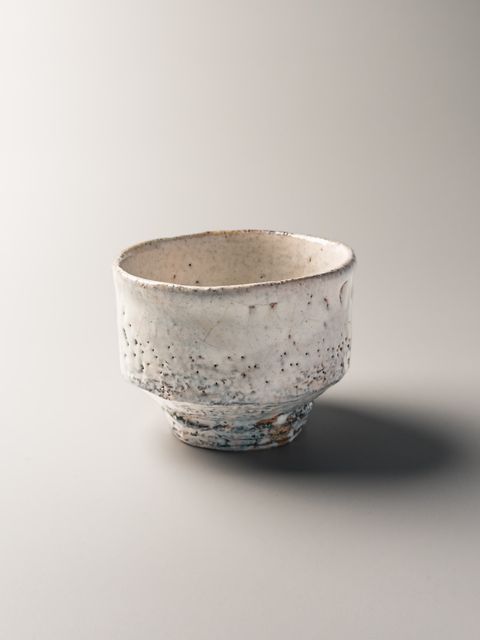
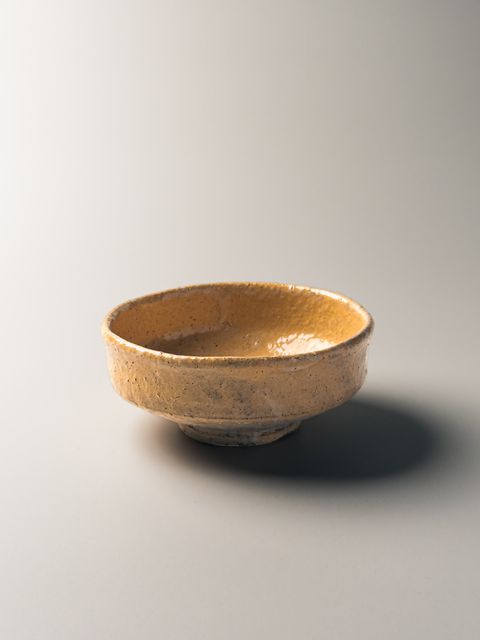
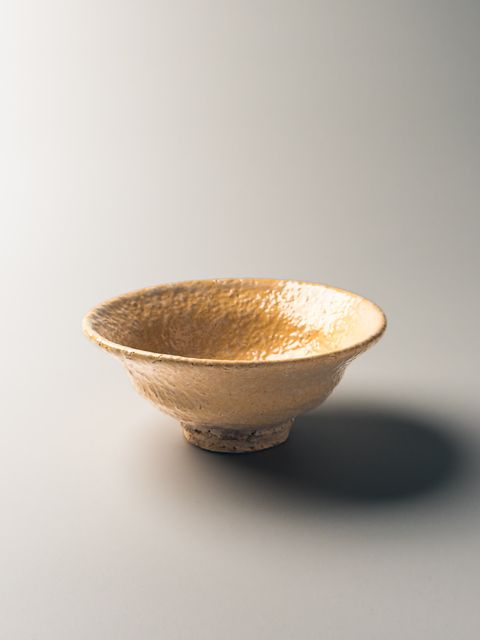
A bowl that finishes itself in your hands.
Read the story
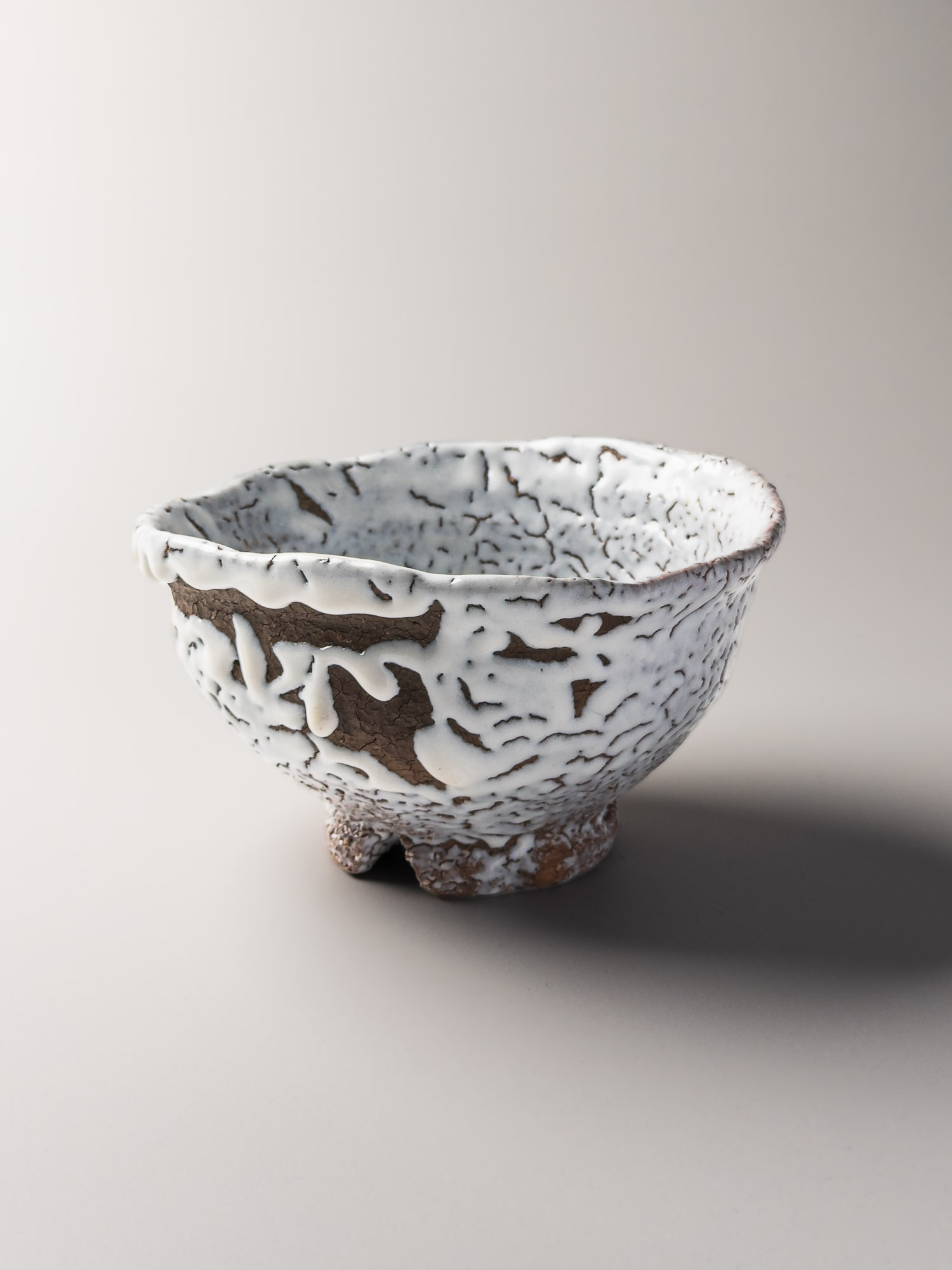
Hagi ware comes from Yamaguchi, at the far western end of Honshū, and has been part of the Way of Tea for four centuries. Its clay fires soft and porous; its glaze crazes into a web of hairlines. Tea finds those lines. Over years of use the bowl's colour slowly shifts — the Japanese call it nanabake, the seven changes — until the bowl you own looks like nobody else's, because nobody else drank from it.
It is the same promise as the Kaikado caddy and the raku bowl, made in clay: you don't buy the finished object, you finish it.
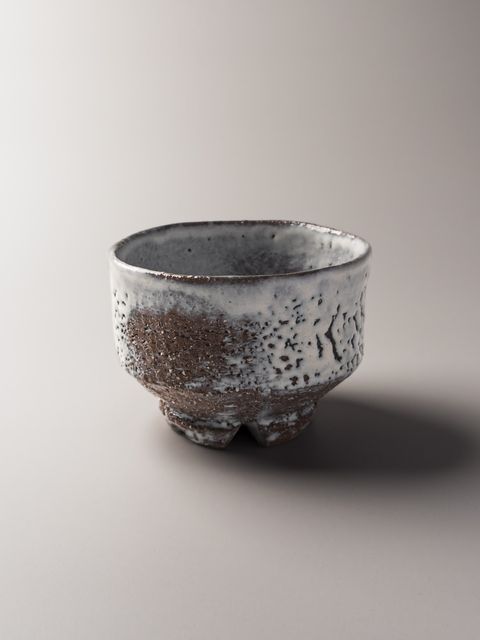
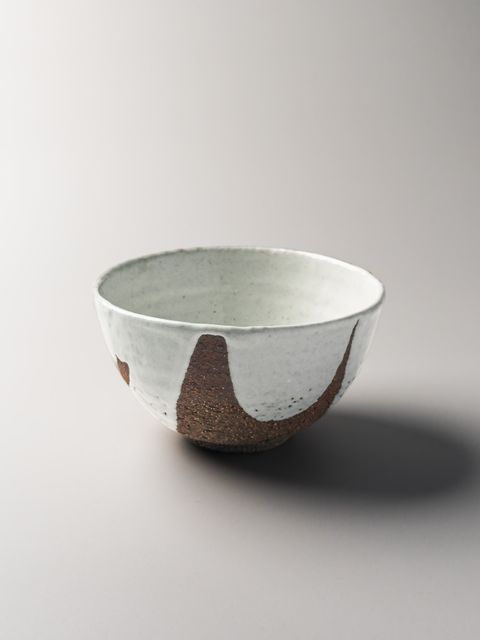
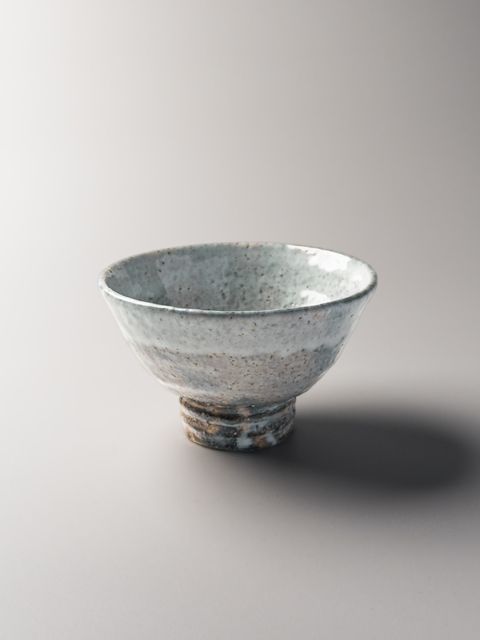
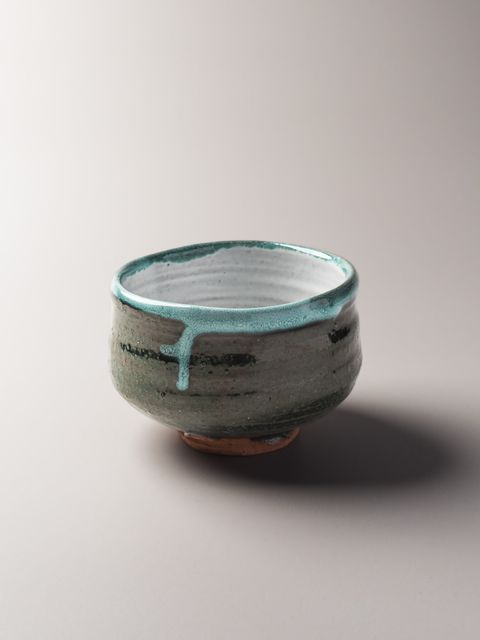
The three. Kunisuke Nakahara (b. 1948, Hagi) worked out his clay and glazes by trial and error and has fired his own kiln, Kunisuke-gama, since 1976; the tea bowl, in crawled kairagi glaze and Kyūsetsu white, is what he works towards. Setsuo Hara (b. 1952, Hagi) worked at the city's Tenryu Kiln; his dealer lists him in the Kyushu–Yamaguchi Ceramics Exhibition of 1978. Seigan Yamane (also b. 1952, Hagi) took the opposite road: self-taught, his own Kōsai-an kiln since 1991, and a blue glaze so much his that it is called “Seigan Blue” — it gives Hagi's soft clay its sky.
Nakahara's biography is from the Hagi Ceramic Artists’ Association and the Hagi kiln map; Hara's came to us through his dealer; Yamane's from the Hagi Ceramic Artists’ Association. The photographs are of the bowls themselves.