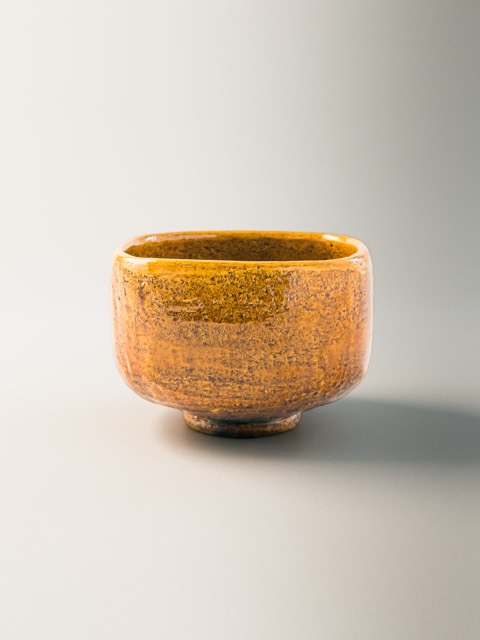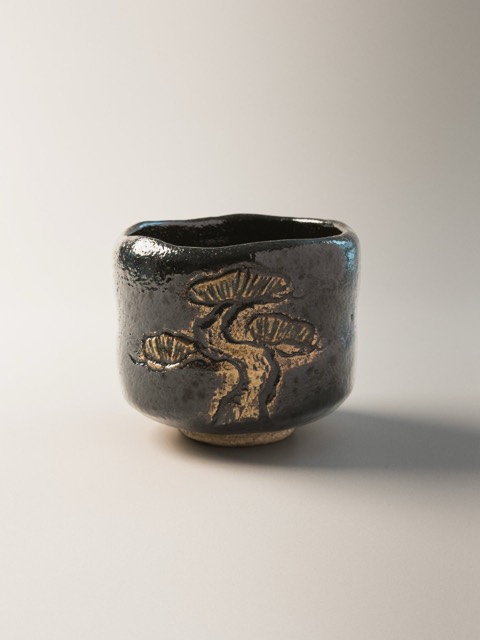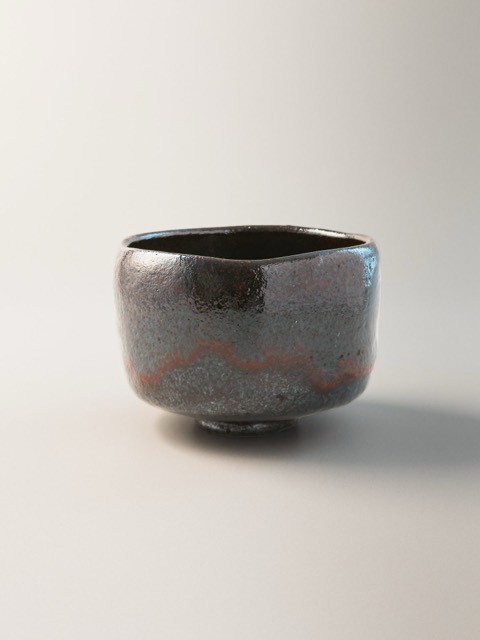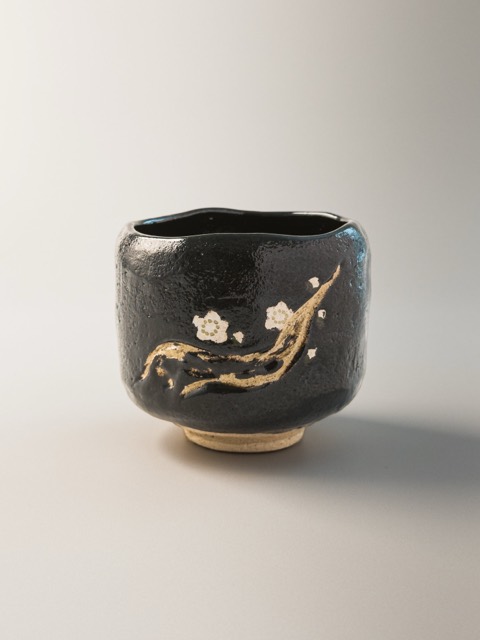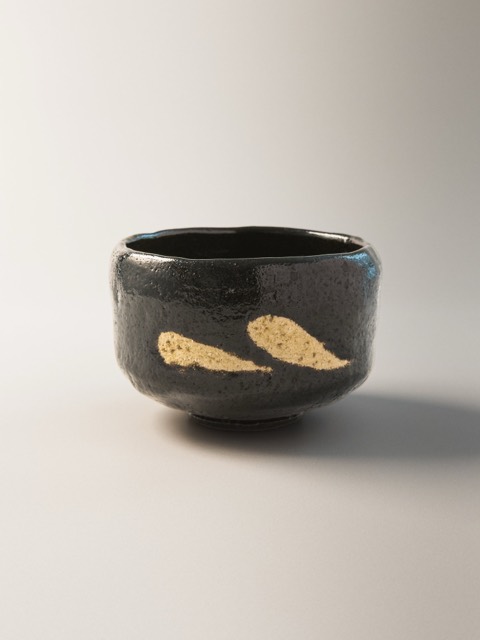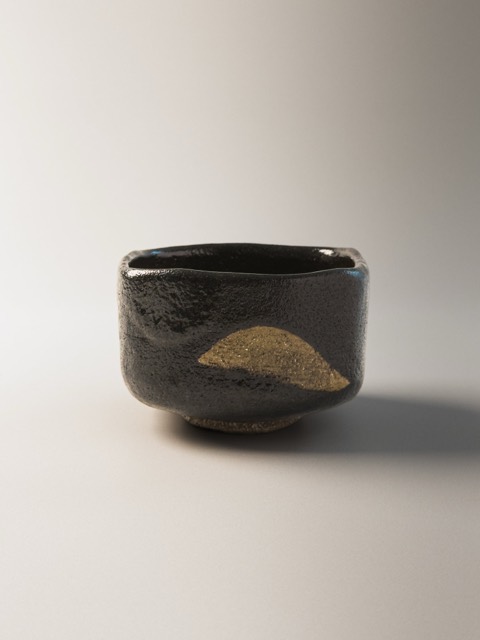
← The shelf

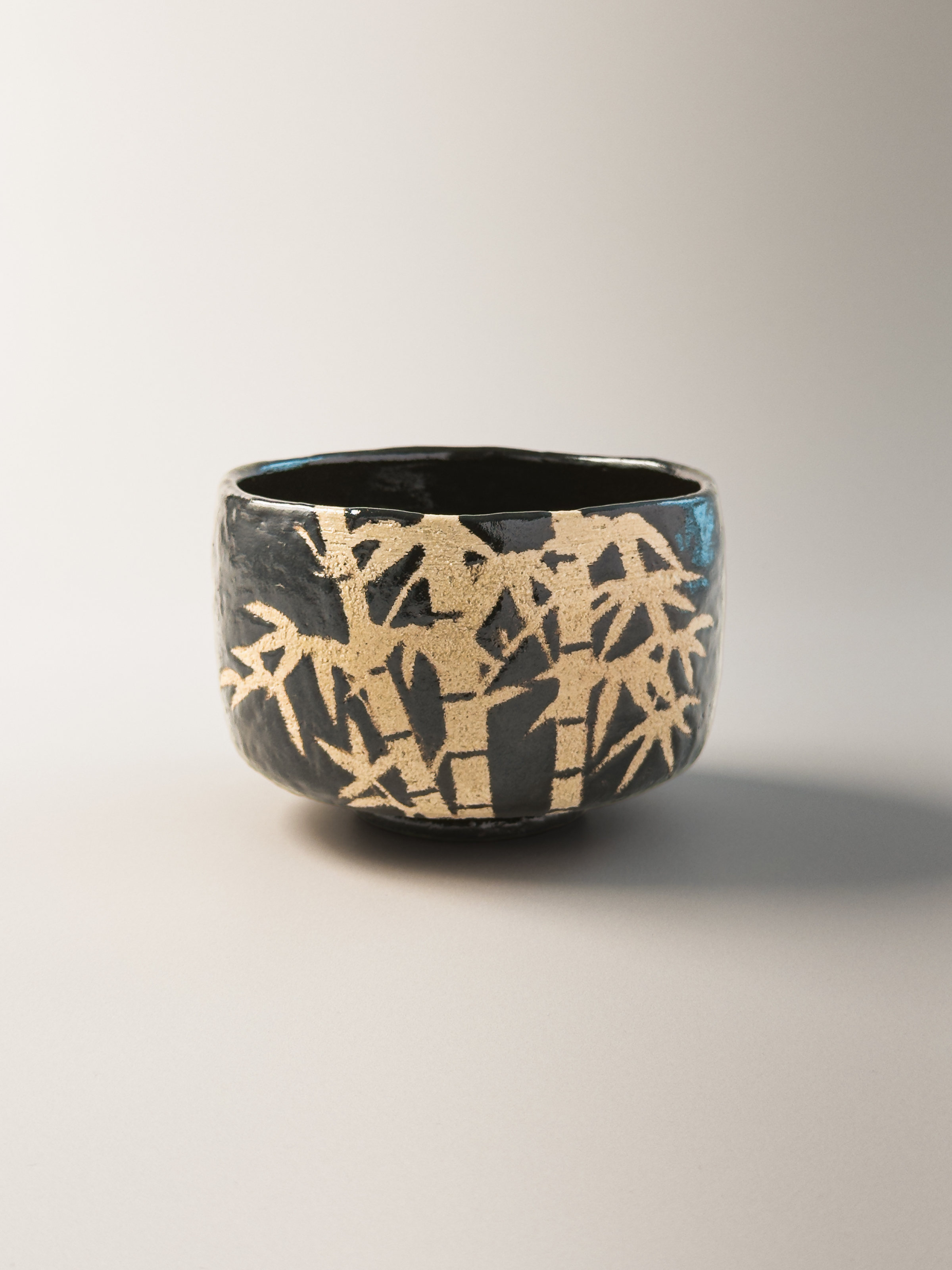
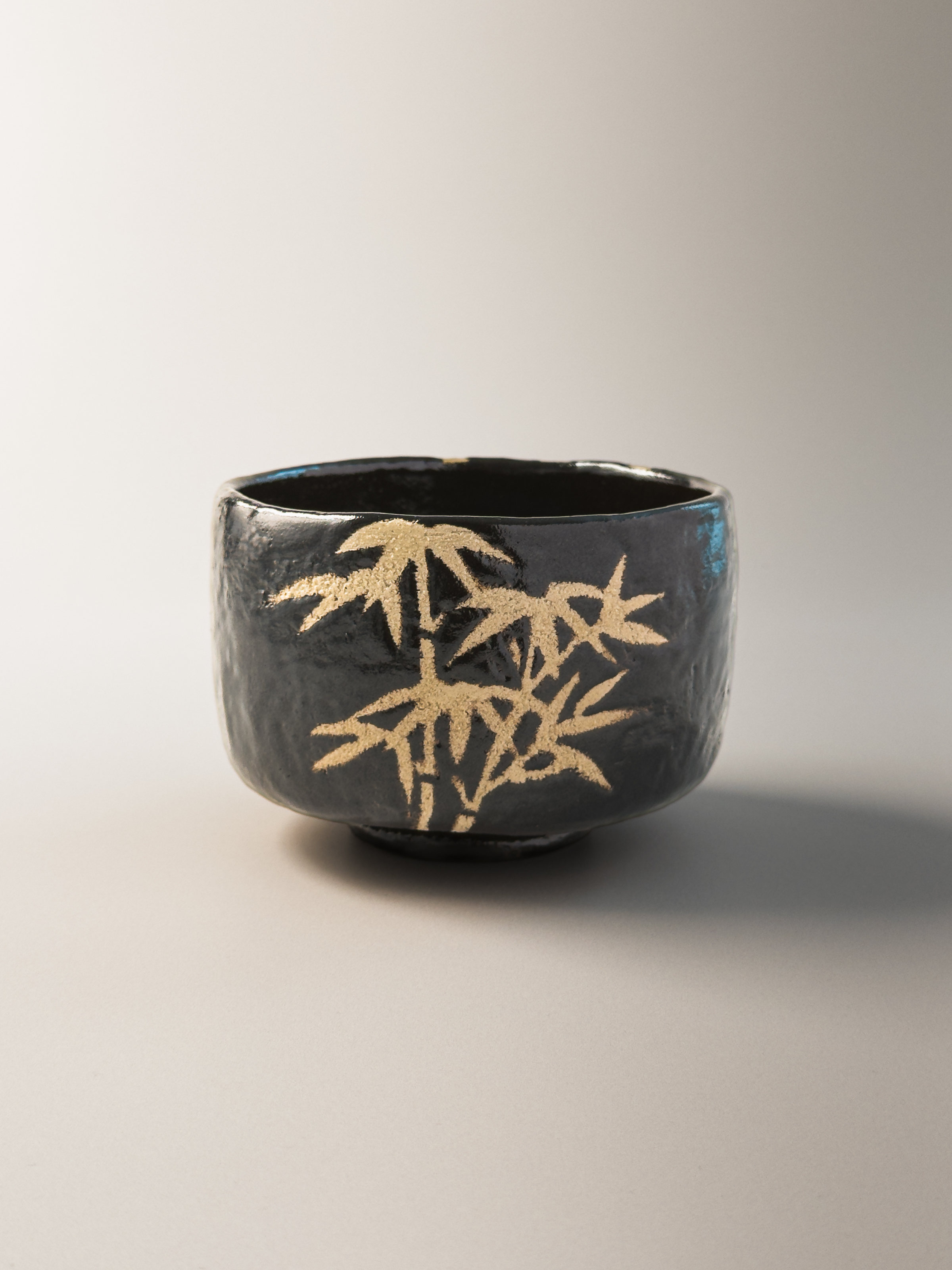
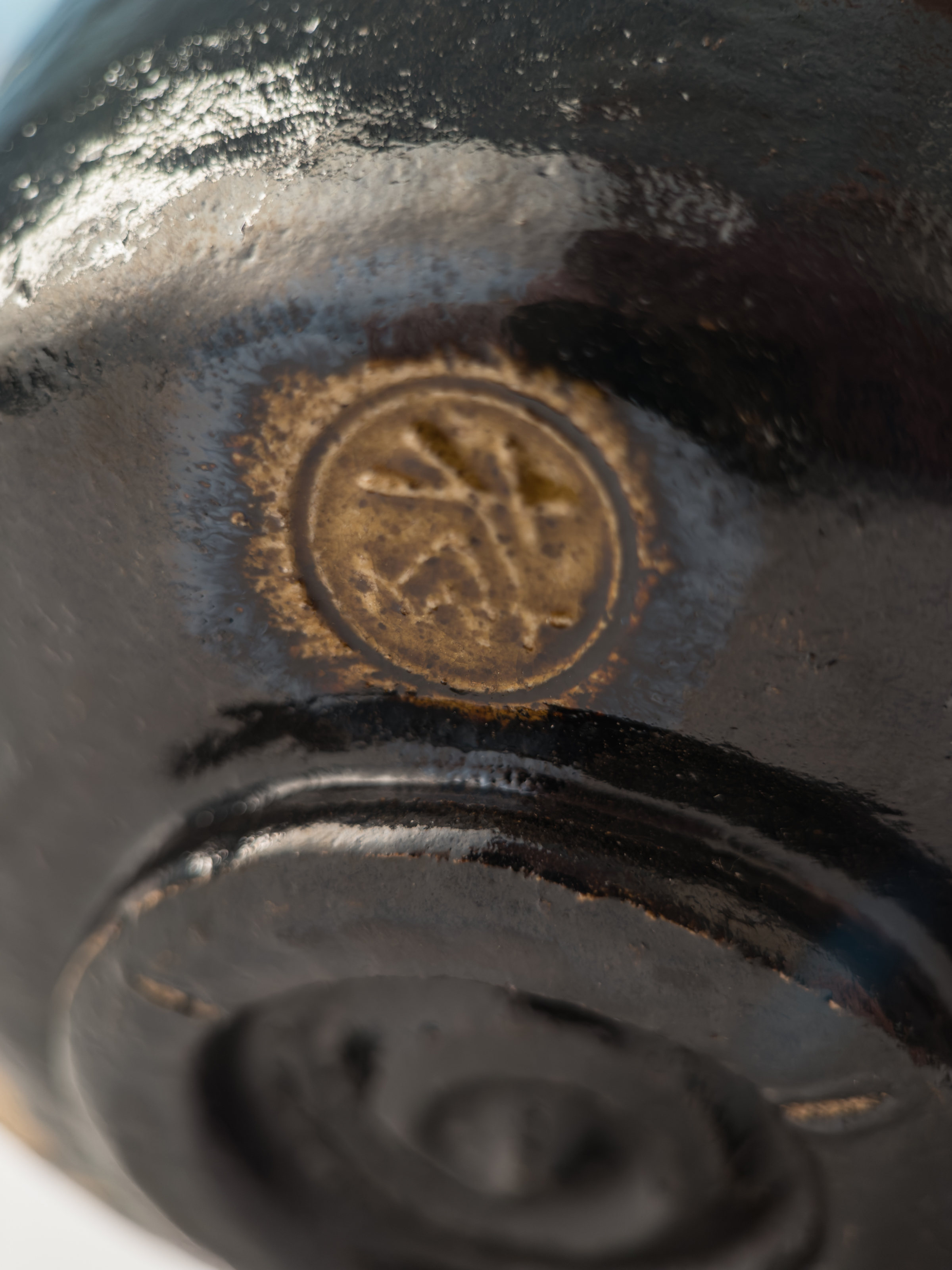
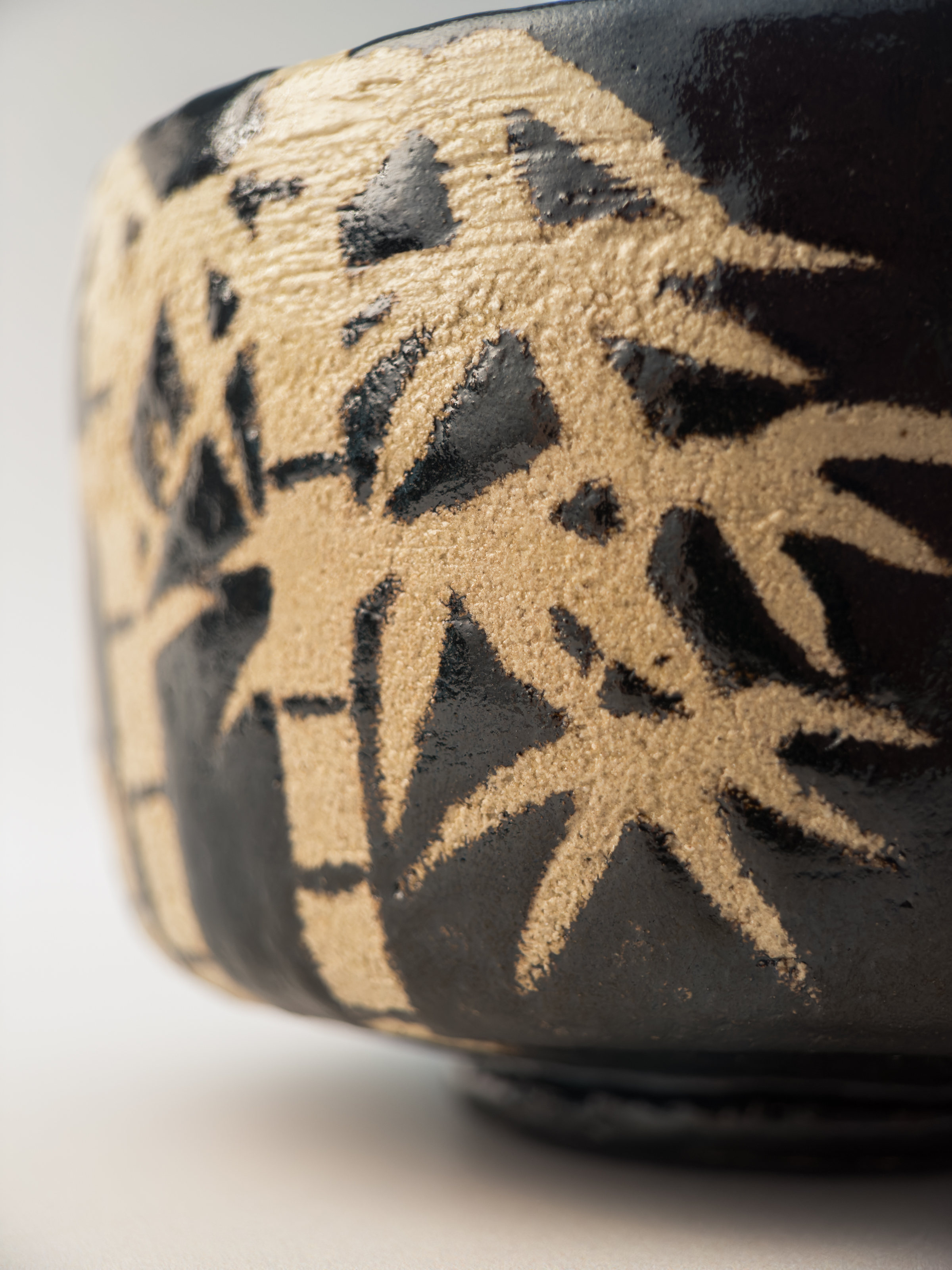
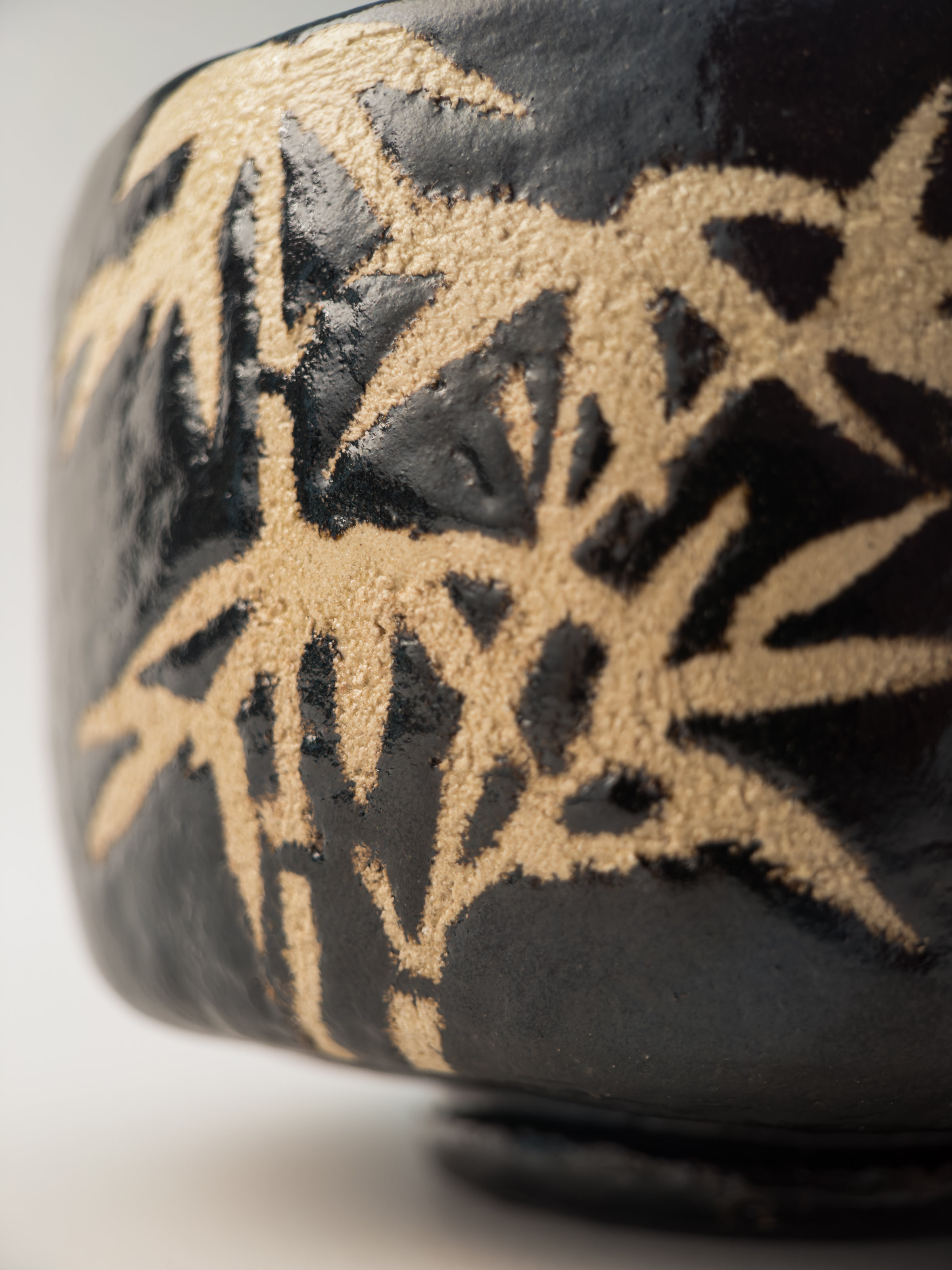
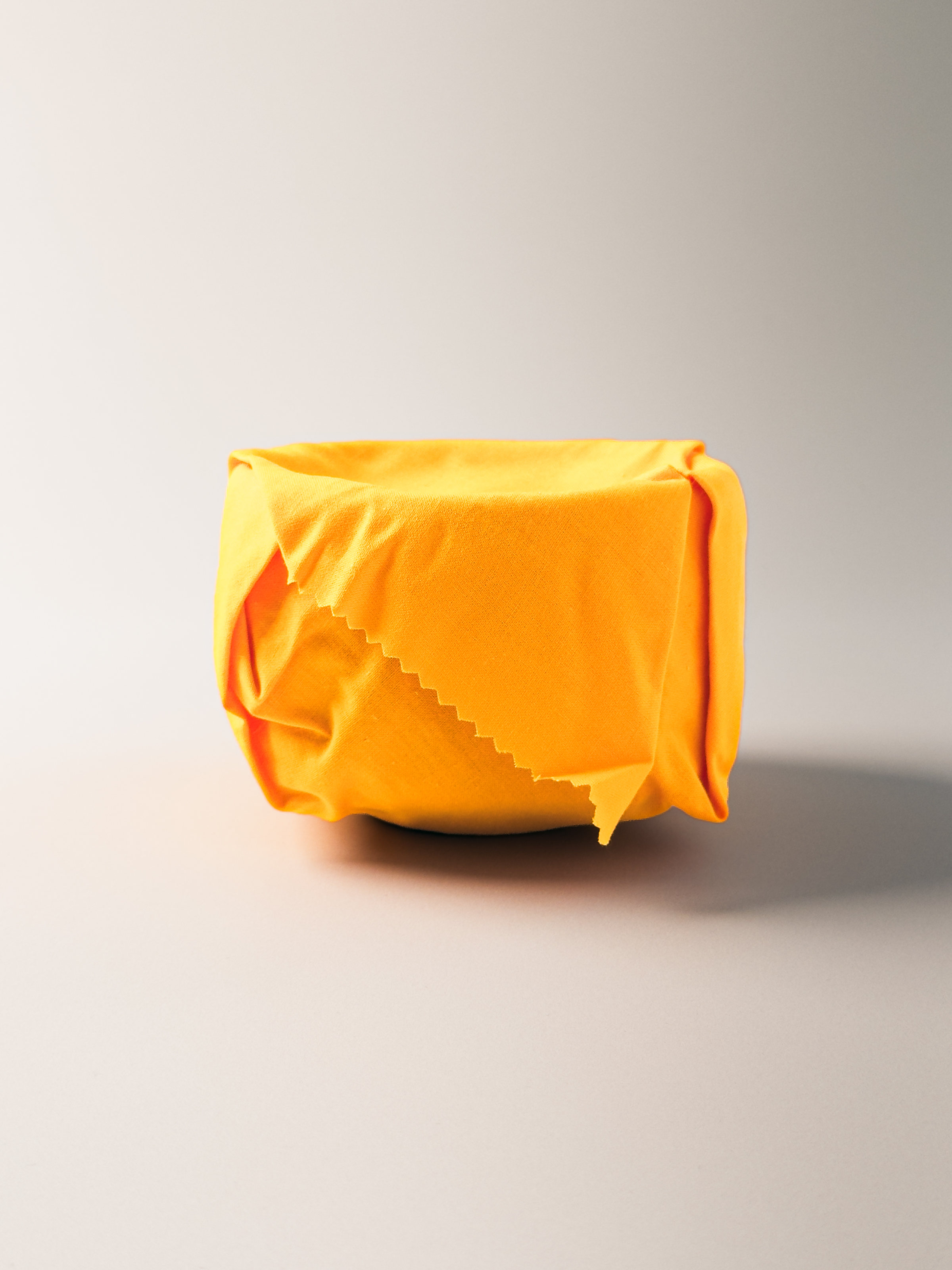
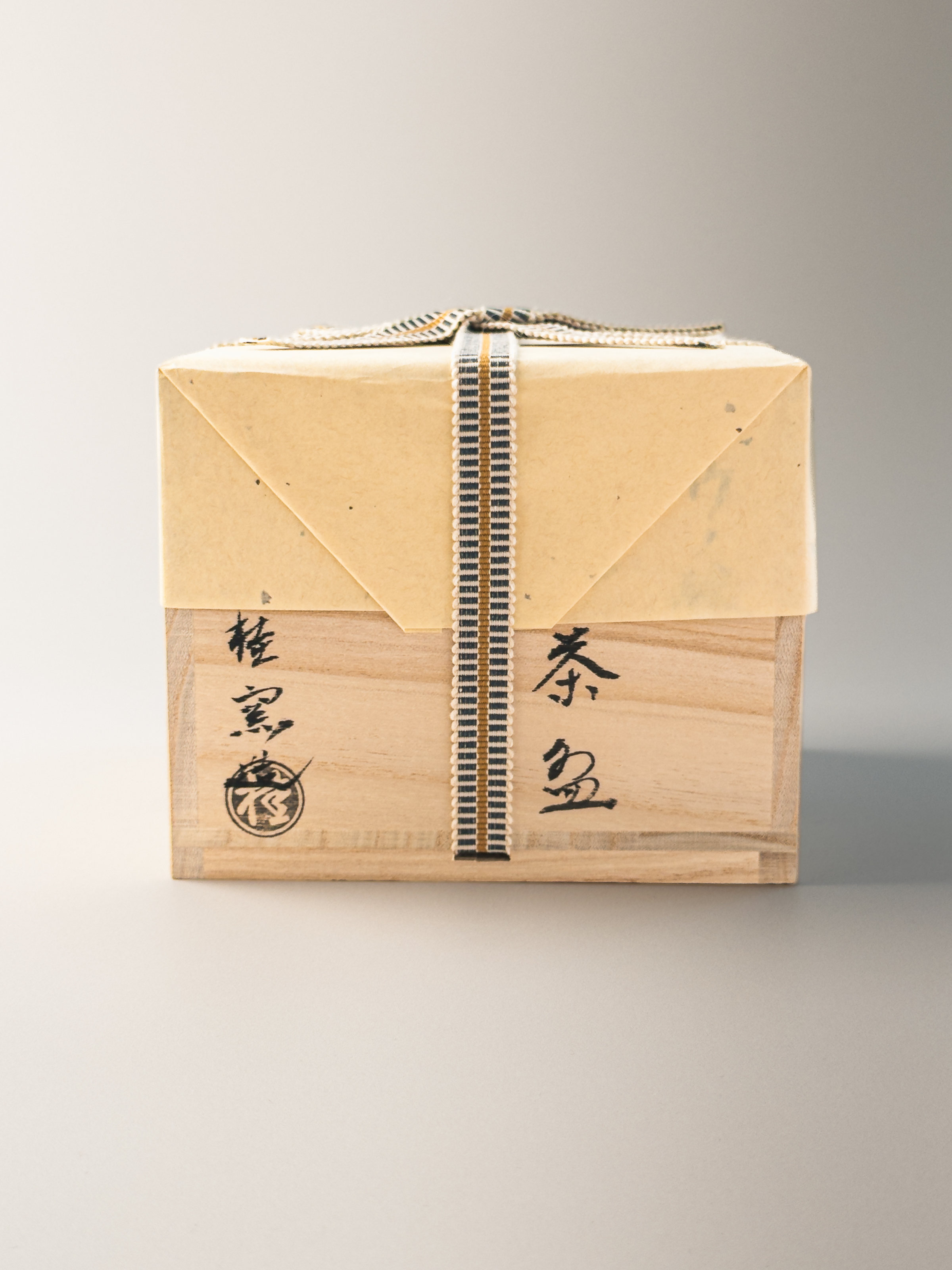
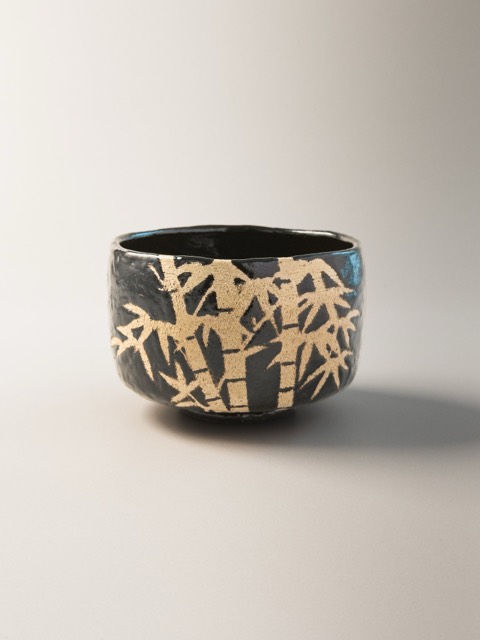
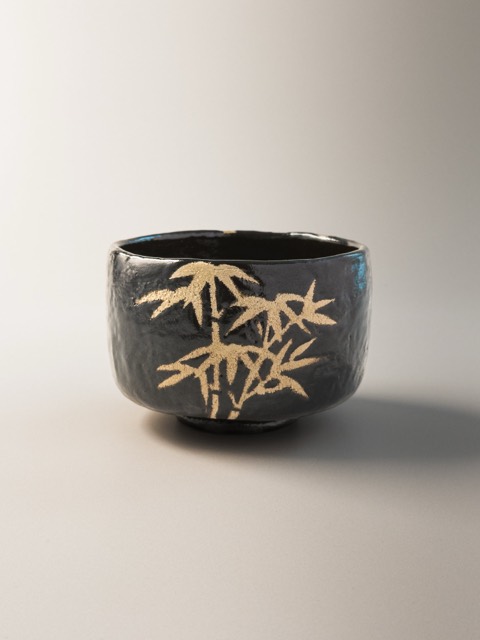
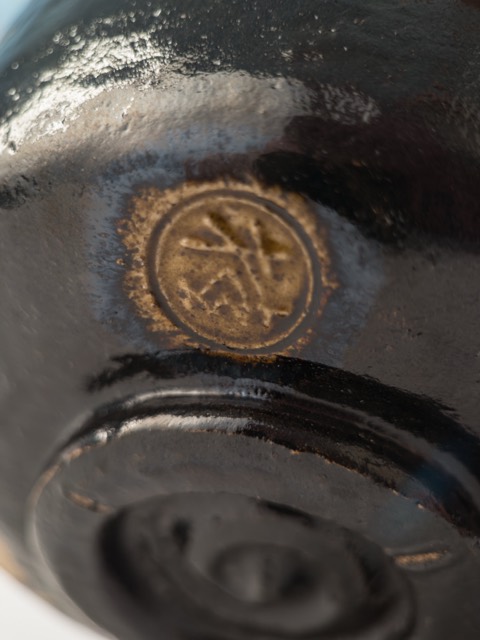
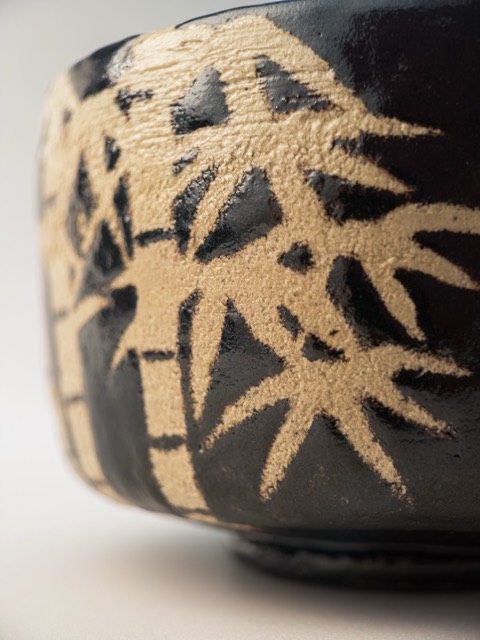
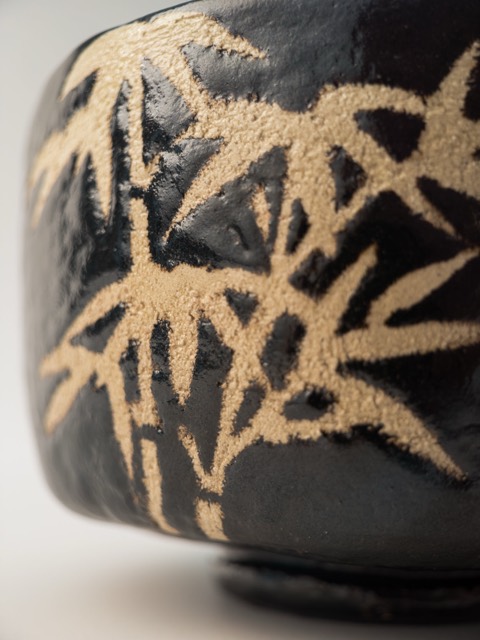
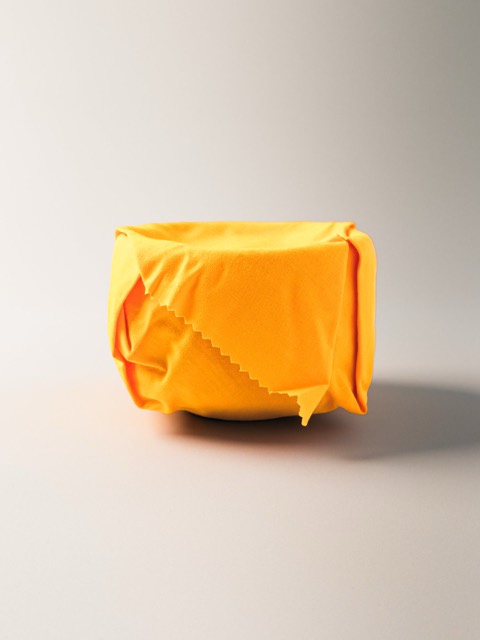
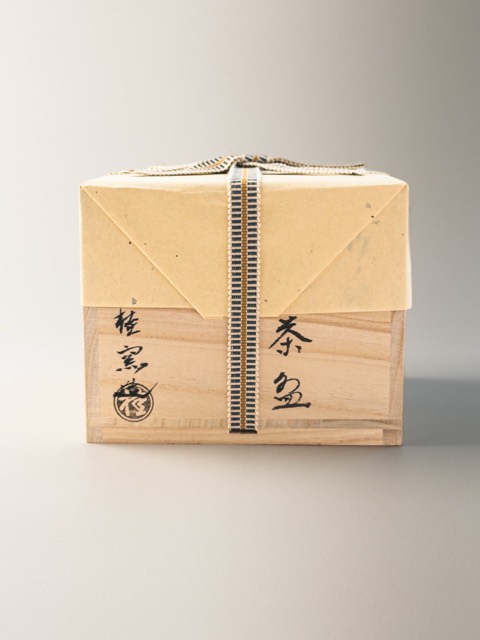
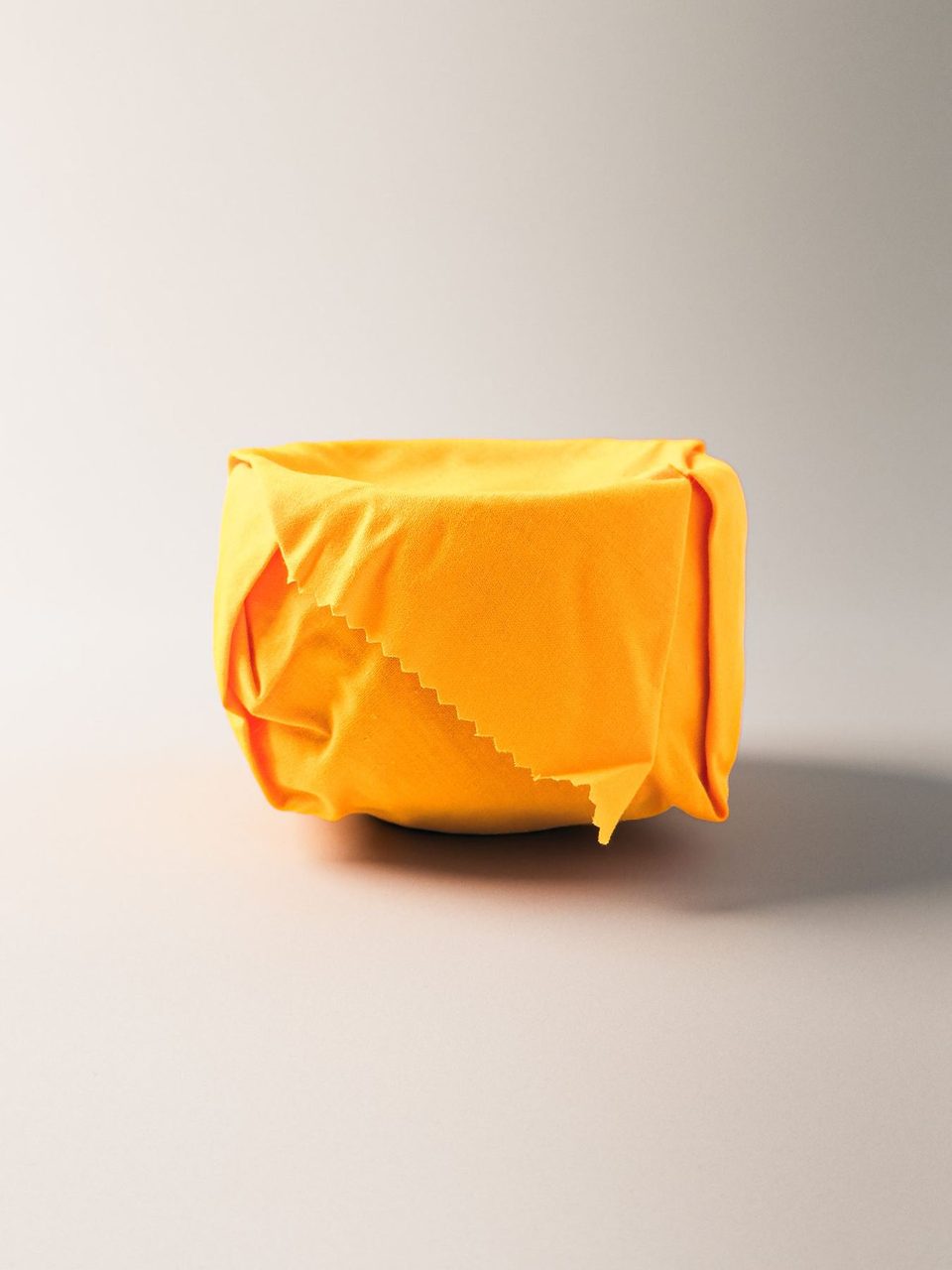
Bamboo Forest Tea Bowl: a black bowl with pale bamboo stems and leaves on its side Bamboo Forest Tea Bowl: the same bowl from another angle Bamboo Forest Tea Bowl: the foot, close up Bamboo Forest Tea Bowl: a closer look at the same bowl Bamboo Forest Tea Bowl: a closer look at the same bowl Bamboo Forest Tea Bowl: the bowl wrapped in its yellow cloth Bamboo Forest Tea Bowl: its paulownia box, inscribed by Rumi Higaki

Photographs by Marcin Chełkowski.

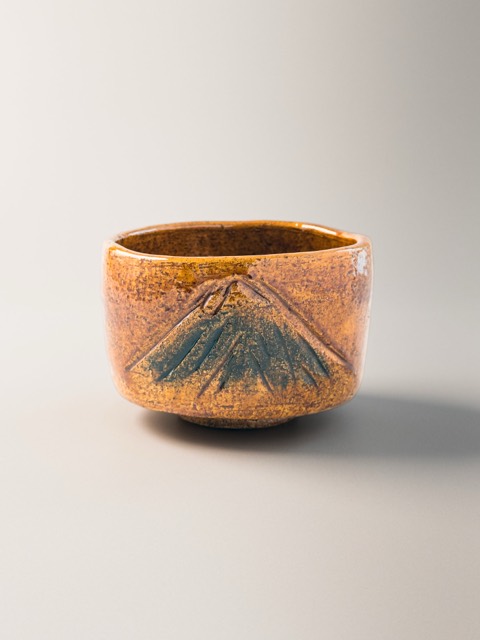
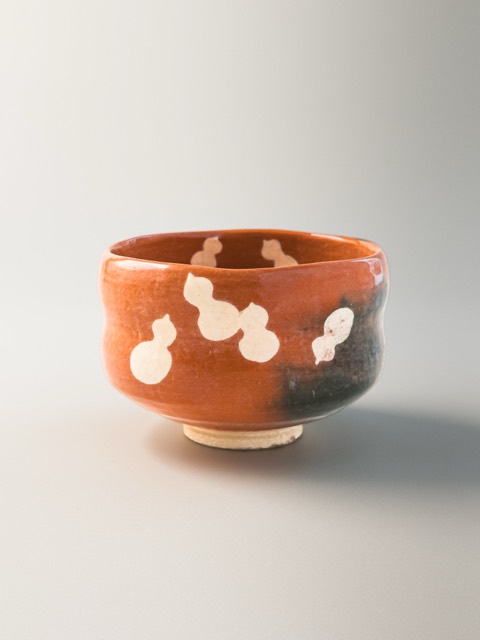
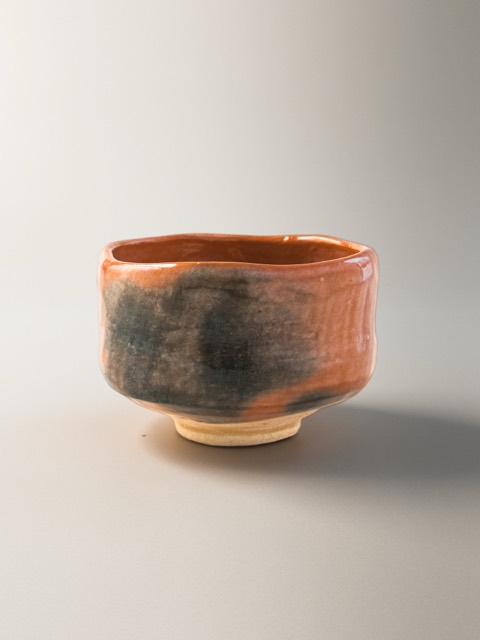
Katsura-gama楽 · one of each design

Bamboo Forest Tea Bowl楽

Black, with pale bamboo stems and leaves.

€330incl. VAT · post free

Posted within two working days. Post free.

★ 4.7 · 150+ reviews of the bar on GoogleGoogle reviews of our bar in Berlin; we don’t check who wrote them.

What we'd put beside it at the counter.

Or a gift card for the webshop, by email →

  • The piece photographed is the piece you receive
  • One of each design
  • In its own paulownia box, inscribed by Rumi Higaki
  • Card, Apple Pay, Google Pay, PayPal or Klarna, on Stripe.

For the record

The kiln’s title
No. 11 · Bamboo Forest Tea Bowl
Care
Raku is soft and made by hand. When new, the clay may take in a little water; with use it settles. After each use, wash it gently in lukewarm water, without detergent, and wipe it dry; let it dry right through before it goes back in its box. No dishwasher, no acidic food or drink left standing in it, and no knocks or sudden changes of temperature.

Product safety

Maker
Katsura-gama (Katsuragama Co., Ltd., 株式会社桂窯), 26-7 Goryo Kitayama-cho, Nishikyo-ku, Kyoto 615-8253, Japan
Importer
Imported into the EU by KISSABŌ Chelkowska und Chelkowski GbR, Kopenhagener Straße 16, 10437 Berlin, Germany · info@kissabo.com
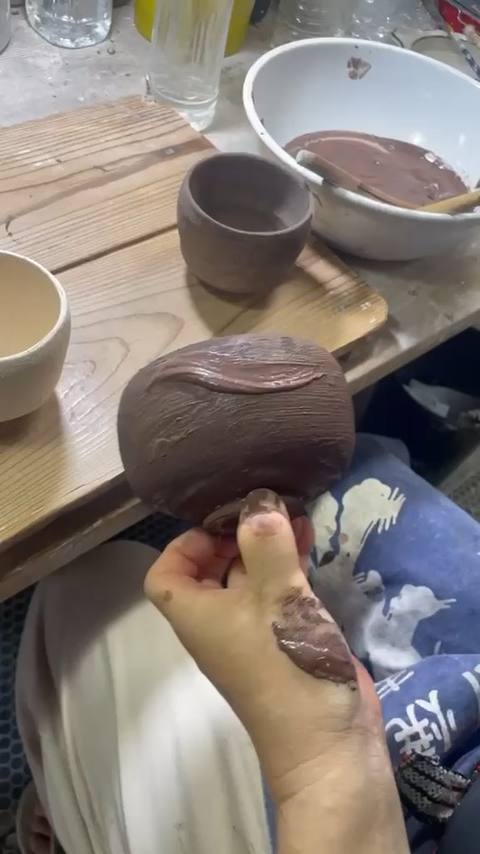
At Katsura-gama: a bowl held by its foot as glaze is laid on, a basin of glaze behind
Who makes it · 作り手

The Higaki family檜垣

Katsura-gama · Kyōto

The family runs the kiln. Every bowl is made by hand in its workshop.

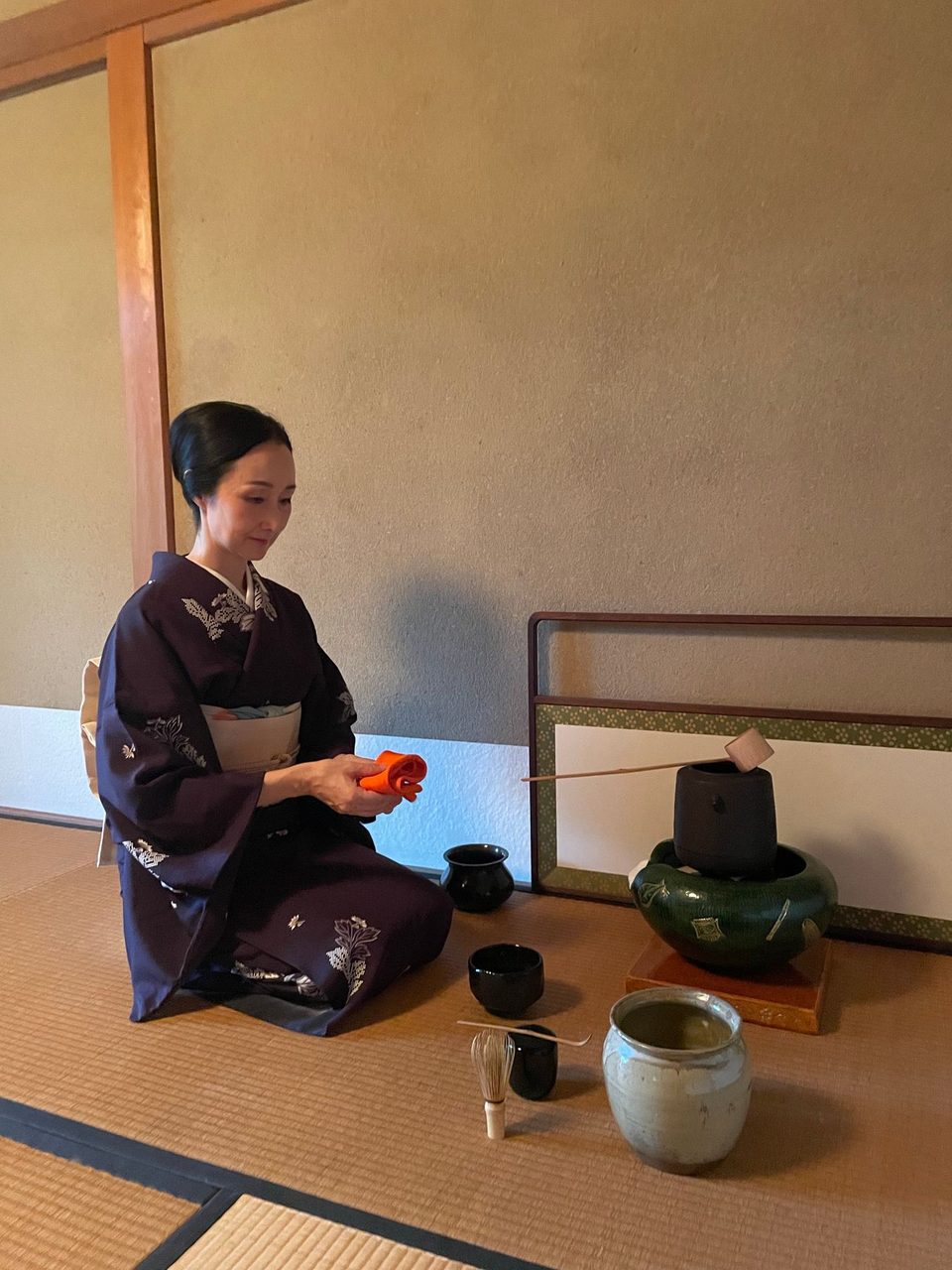
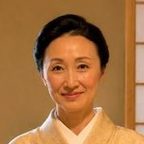
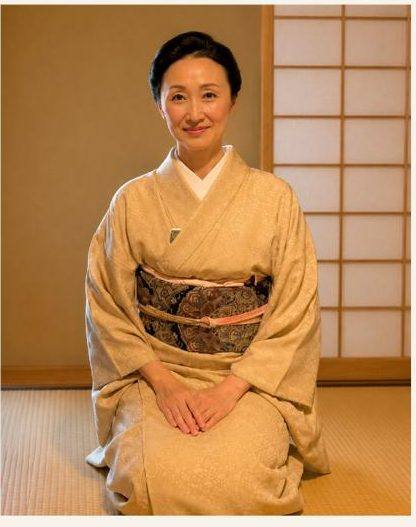
Rumi Higaki in a pale kimono, kneeling on tatami
Tea · 茶

Rumi Higaki

Of the family

She practises tea in the Urasenke tradition and directs the workshop.

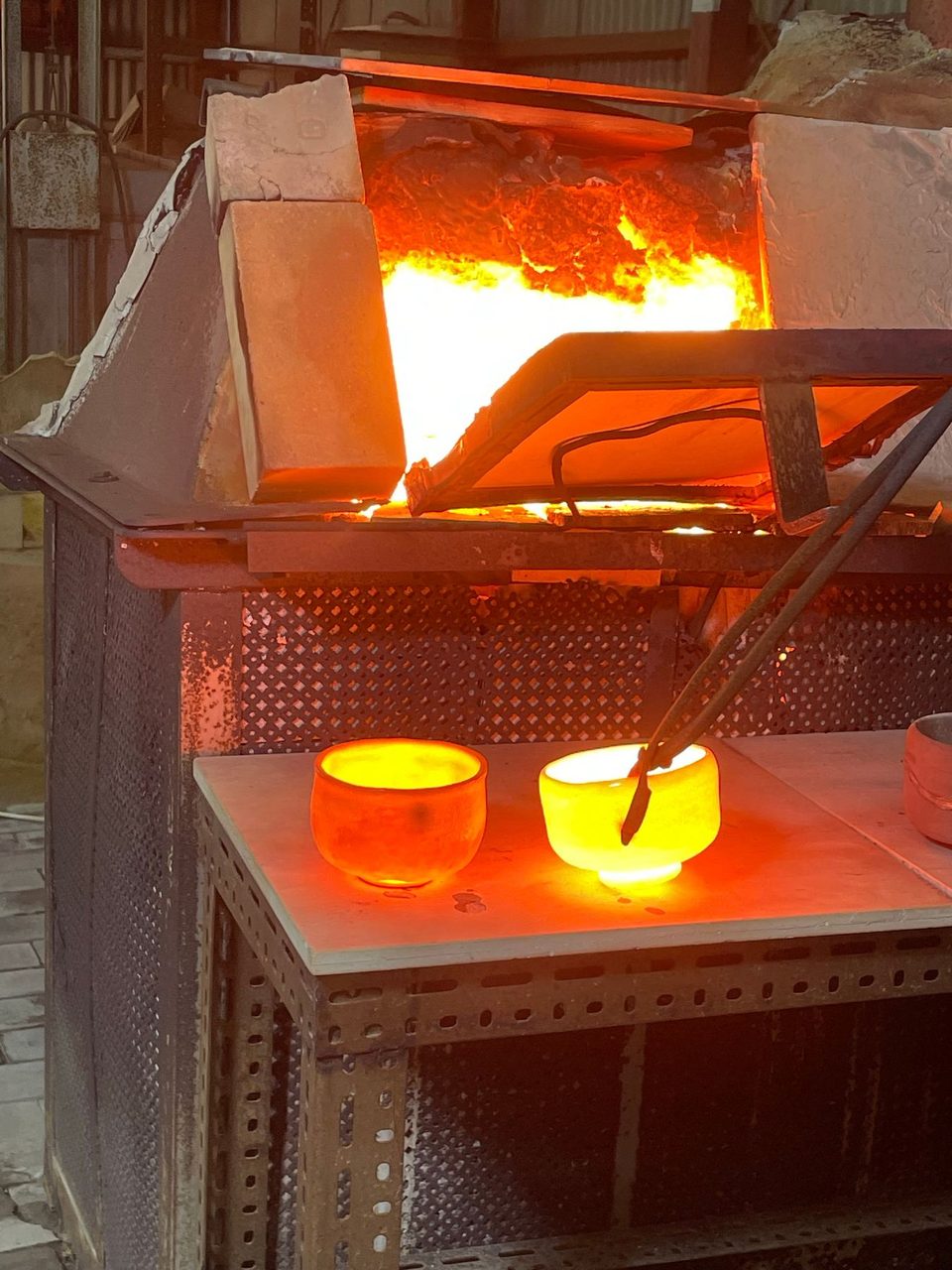
Two Raku bowls glowing orange beside the open kiln at Katsura-gama, one held in iron tongs
At the kiln, Katsura-gama, Kyōto
The kiln · 楽 · Kyōto

Katsura-gama桂窯

Raku tea bowls, made by hand in Kyōto.

The kiln is in Nishikyō-ku, on the city’s western edge.

The making · 手

Made by hand, one at a time.

Raku ware was born in Kyōto in the sixteenth century, for the Way of Tea. At Katsura-gama the bowls are shaped entirely by hand, with no potter’s wheel and no mould. The clay is pressed open and raised on a small turning table and left to stiffen. The wall is pared thin with a steel blade, and the foot is cut. The bowl is dried and given a first firing, then painted where it carries a design, and glazed.

  1. 1Each bowl begins as a ball of clay.

  2. 2The wall is pared thin with a steel blade.

  3. 3Each bowl is fired in the Raku way, on its own or with a few others.

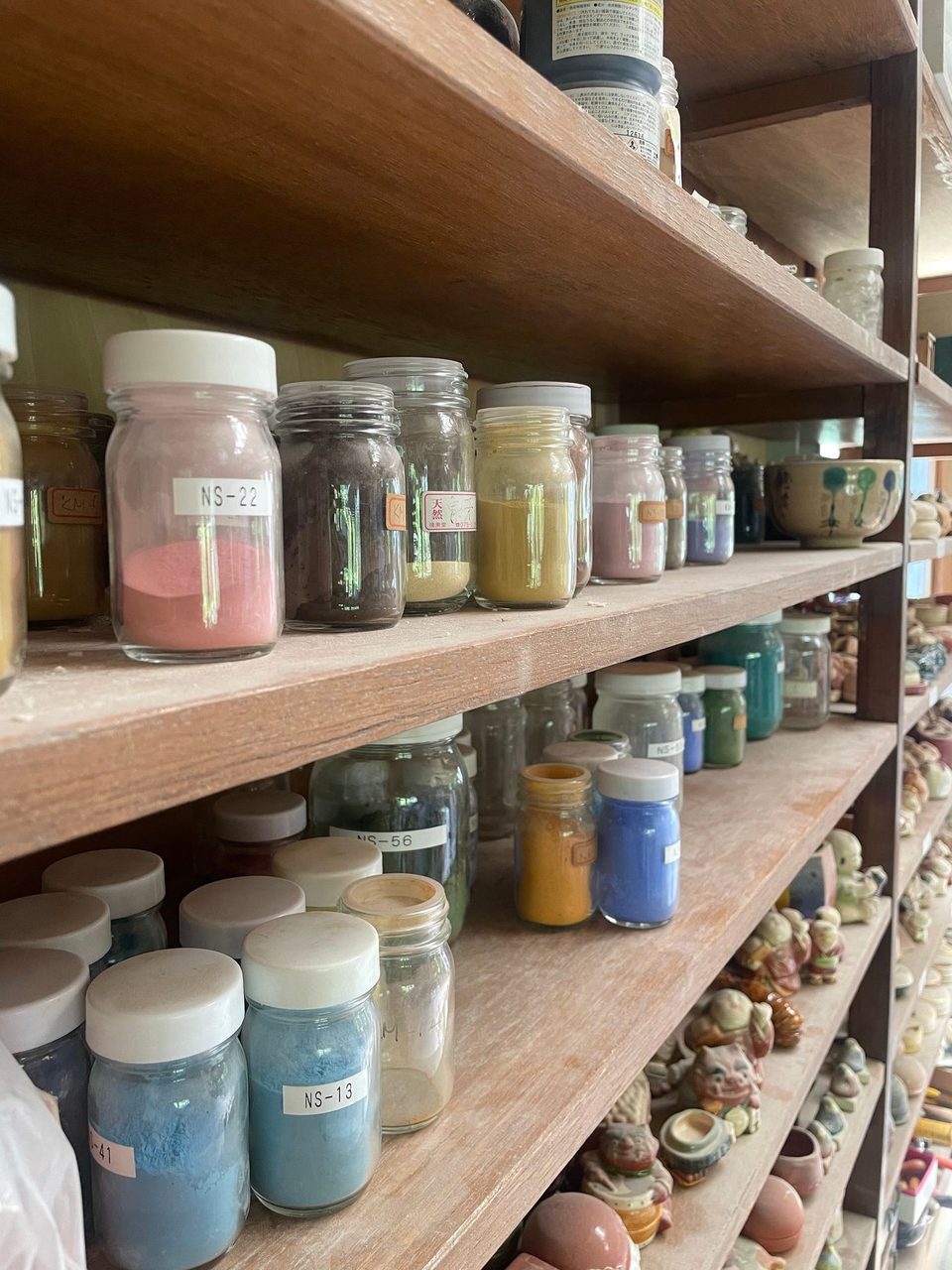
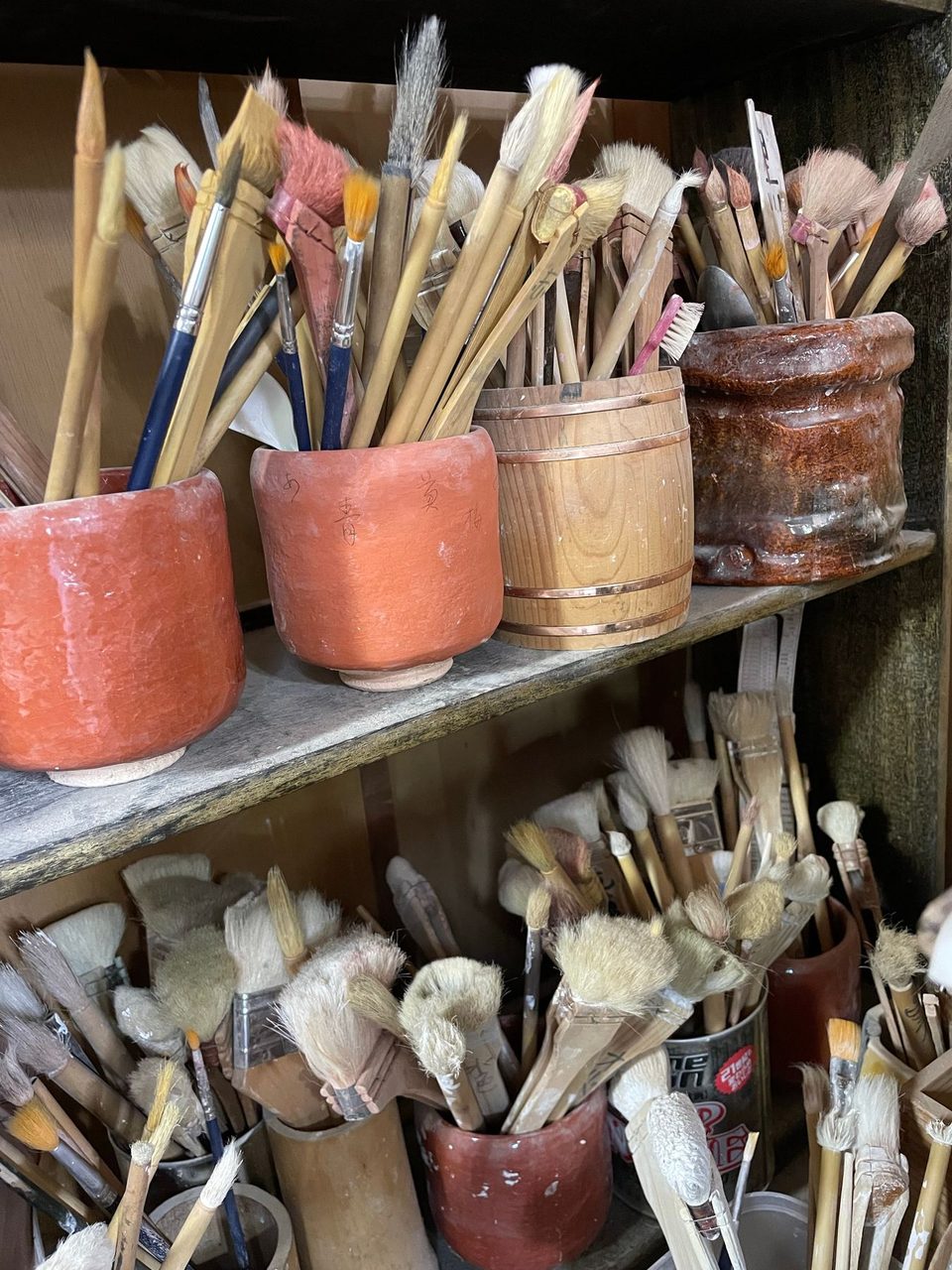
Shelves of glazes and pigments in numbered jars at Katsura-gama Brushes in pots on a shelf in the workshop, a toothbrush among them

Left: glazes and pigments, kept as powder in numbered jars. Right: brushes, and a toothbrush.

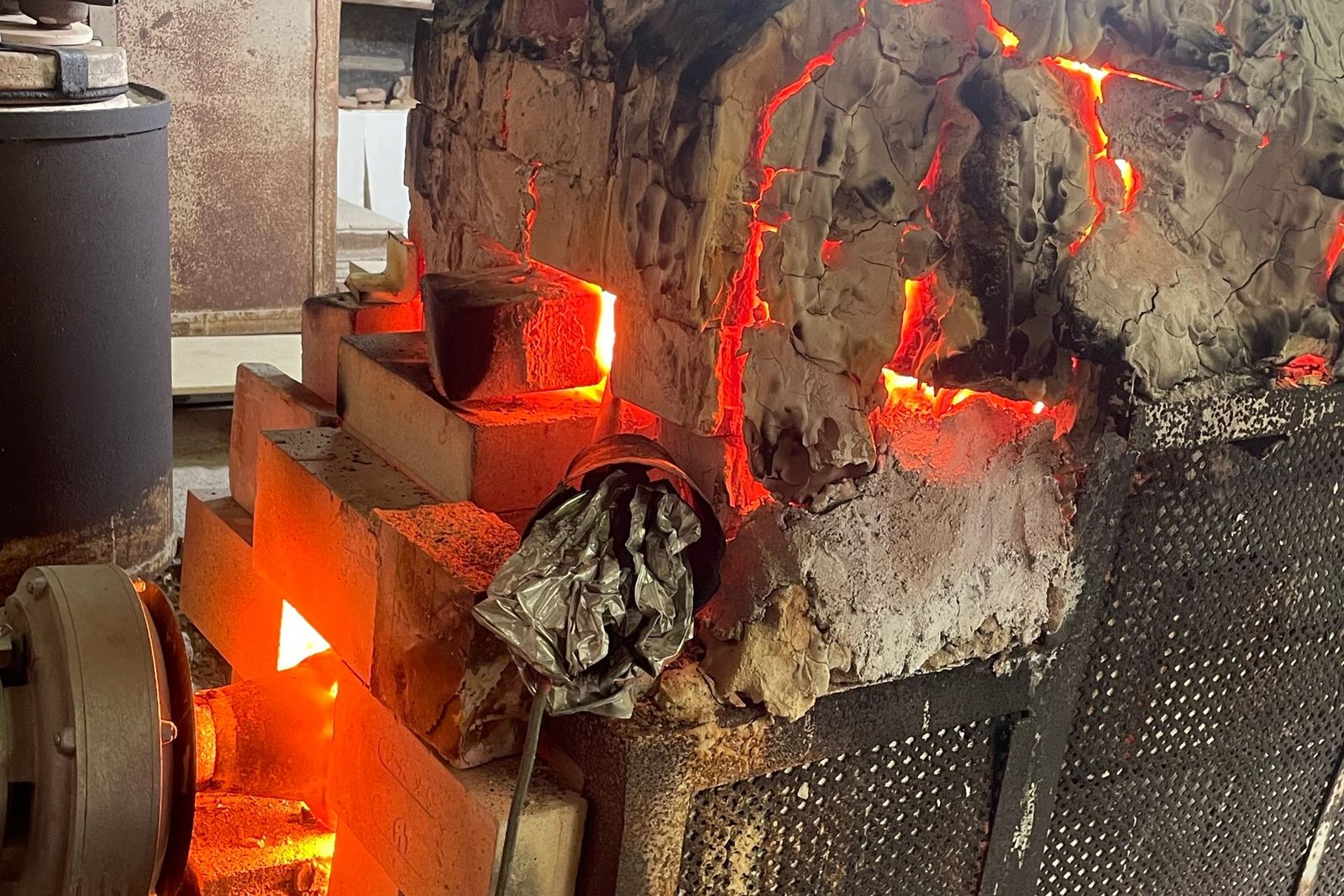
The Raku kiln at Katsura-gama, glowing through cracks in its clay wall
The firing · 火

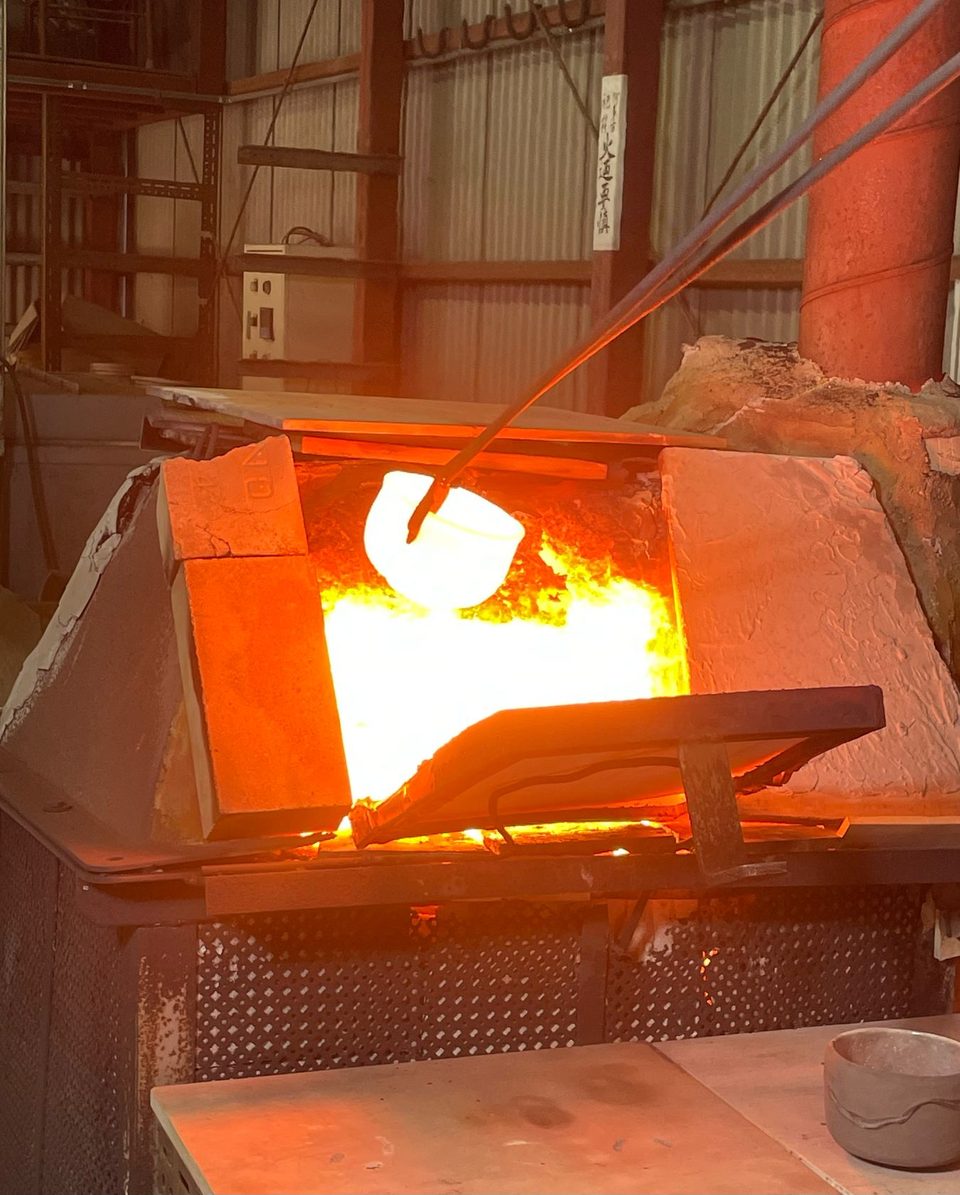
Drawn from the kiln with tongs, while it still glows.

On a steel post at the front of the kiln shed, a paper charm from Atago Shrine: 火迺要慎, take care with fire.

A tea bowl, glowing white, drawn from the open kiln at Katsura-gama with long iron tongs; on a post behind, a paper charm
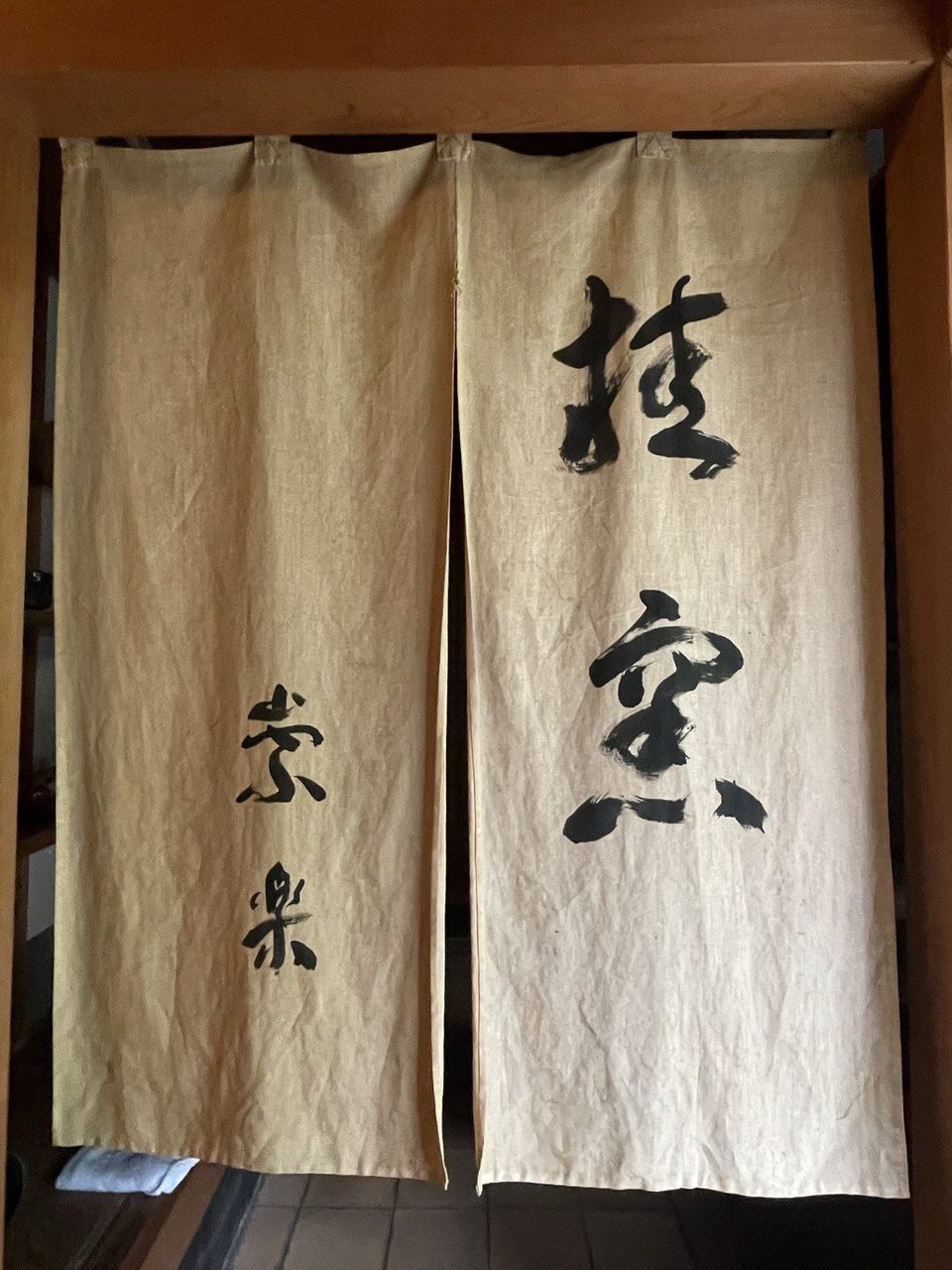
The curtain at the door of Katsura-gama, written with the kiln’s name
The curtain at the door: 桂窯, Katsura-gama, and 崇楽, Sōraku.
The story · 物語

A kiln that began with braziers.

Read the story

The kiln · 窯

Katsura-gama’s founder came to Kyōto from Awaji Island and made decorative roof tiles for shrines. He was the first Sōhaku Yorigami, a man of wide interests: tea, flower arrangement, calligraphy and poetry. With the technique he had developed for the tiles, he began to make dofuro, the clay braziers that hold the charcoal beneath the kettle in a tea room. That was the beginning of Katsura-gama.

The family · 家

The first Sōhaku Yorigami was followed by his eldest son, the second Sōhaku. The first Sōhaku’s eldest daughter, Sōraku Higaki II, and her husband, Sōraku Higaki I, are the parents of Seishi Higaki (檜垣青子), the third generation. Her son, Ryōta Higaki (檜垣良多), was chosen to carry on the family tradition, and later took the name Sōhaku Yorigami (寄神崇白).

The Higaki family runs Katsura-gama today.

Tea · 茶

Rumi Higaki studied at the Urasenke Gakuen Professional College of Chadō, where she received her tea name. Her husband, Ryōta Higaki, carries the name Sōhaku Yorigami.

The room · 房

Kissabō is a tea bar with sixteen seats, in Prenzlauer Berg. Our own bowls are in daily use, Raku and Hagi among them, and a guest picks the bowl the tea comes in.

The history is Katsura-gama’s own account, given to us in October 2026. Photographs of the bowls, the box and the cloth: Kissabō. Photographs and films of the kiln and Rumi Higaki: Katsura-gama.
The box · 箱

In its own box.

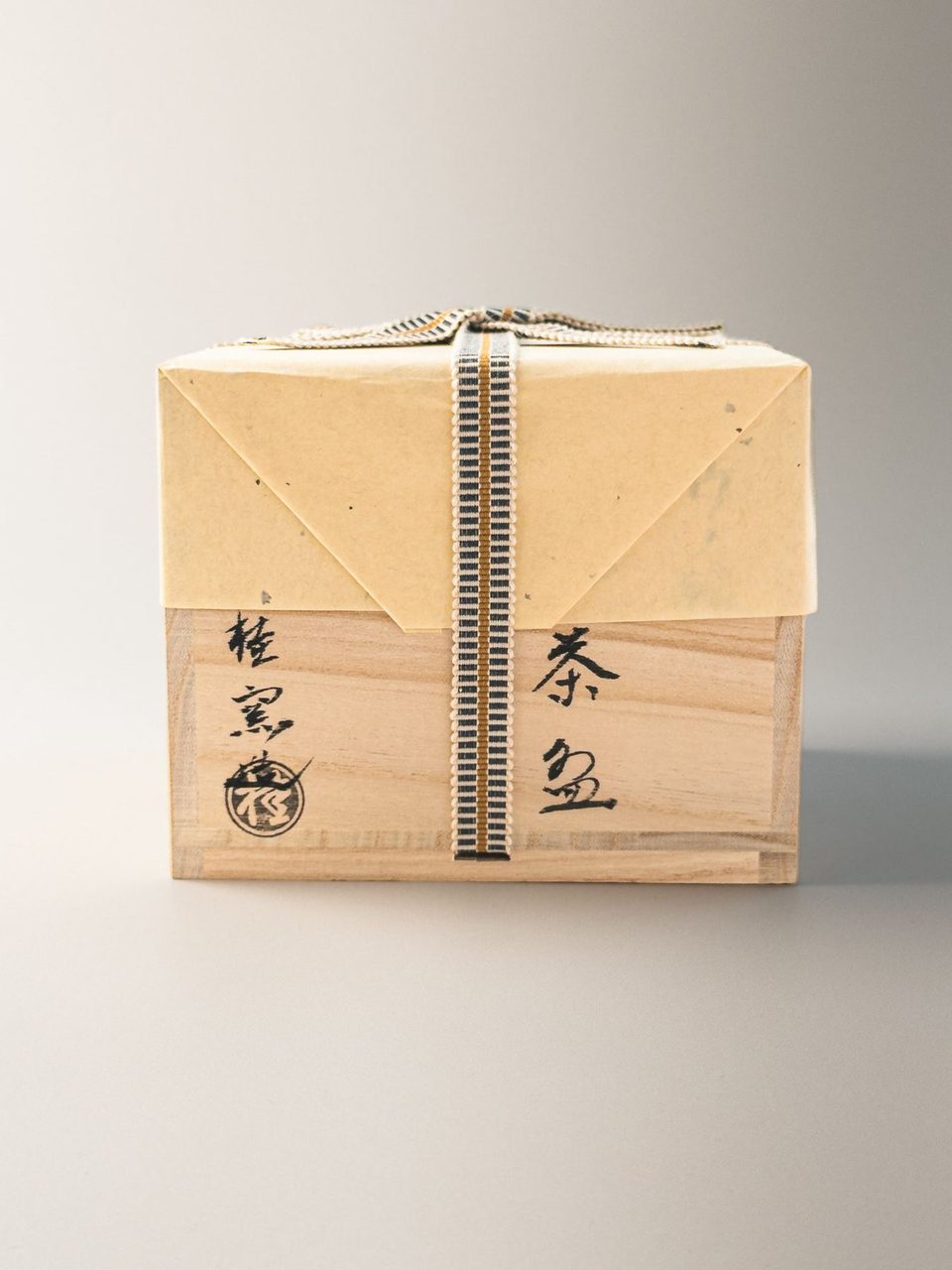
Each bowl carries the Katsura-gama seal and comes in its own paulownia box, the tomobako, inscribed by Rumi Higaki and marked with the same seal.

A paulownia box tied with a flat cord, its side written in ink: 桂窯造 and 茶盌 A tea bowl wrapped in orange cloth

Left: the box, tied as it came from the kiln. In Rumi Higaki’s hand: 茶盌, tea bowl, and 桂窯造, made at Katsura-gama. Right: inside, each bowl is wrapped in cloth.

Rumi Higaki in kimono, kneeling in the tea room at Katsura-gama, a kettle and bowls beside her
Tea · 茶

Rumi Higaki, at tea.

楽

A question about a bowl?

Write to us, or come by: Kissabō, Kopenhagener Str. 16, Berlin, Wednesday to Sunday, 14:00–18:00. A bowl ordered here is posted within two working days.

Write to us about a bowl →