← Teas

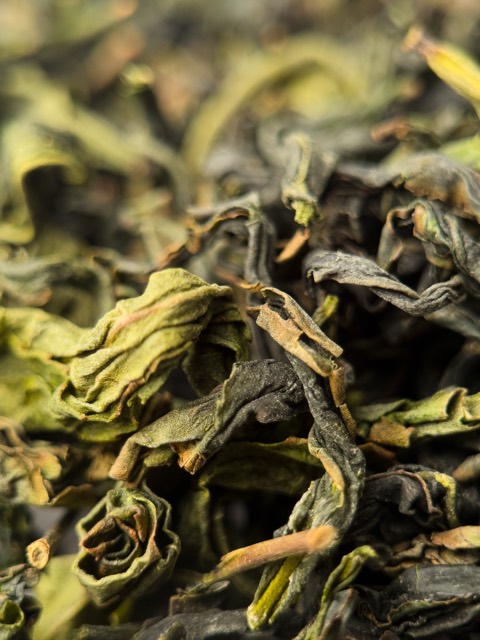
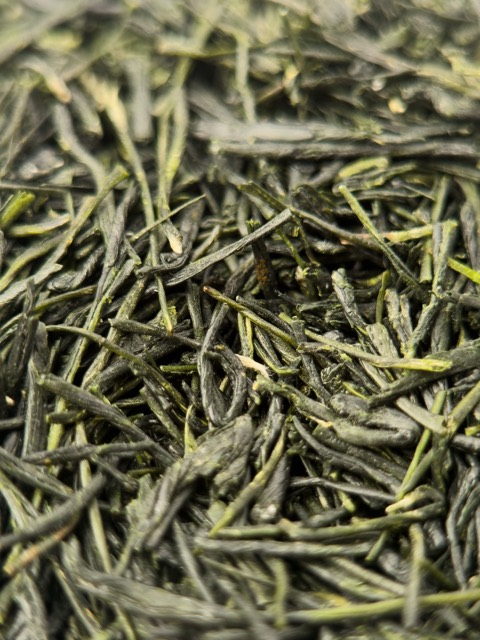
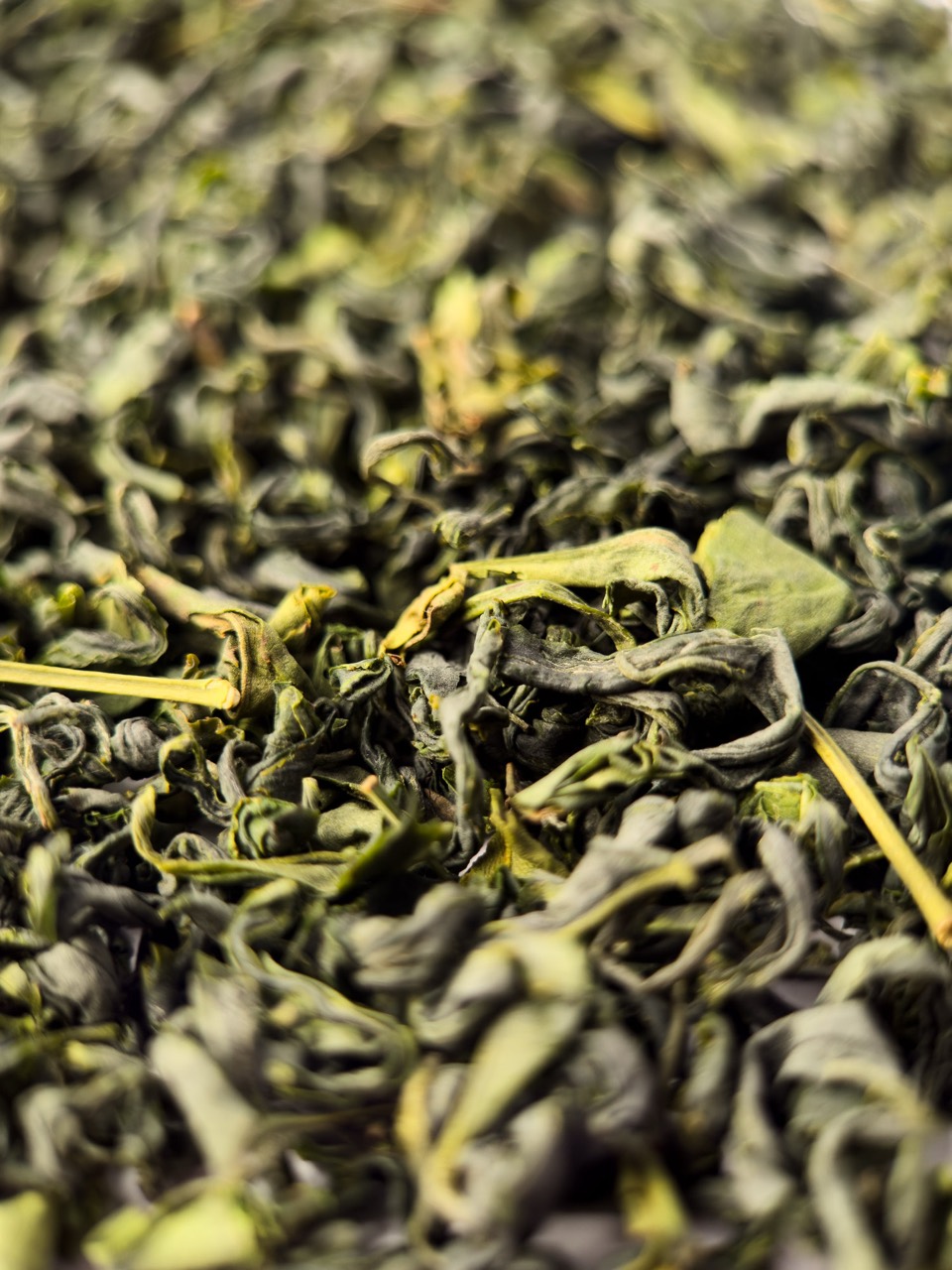
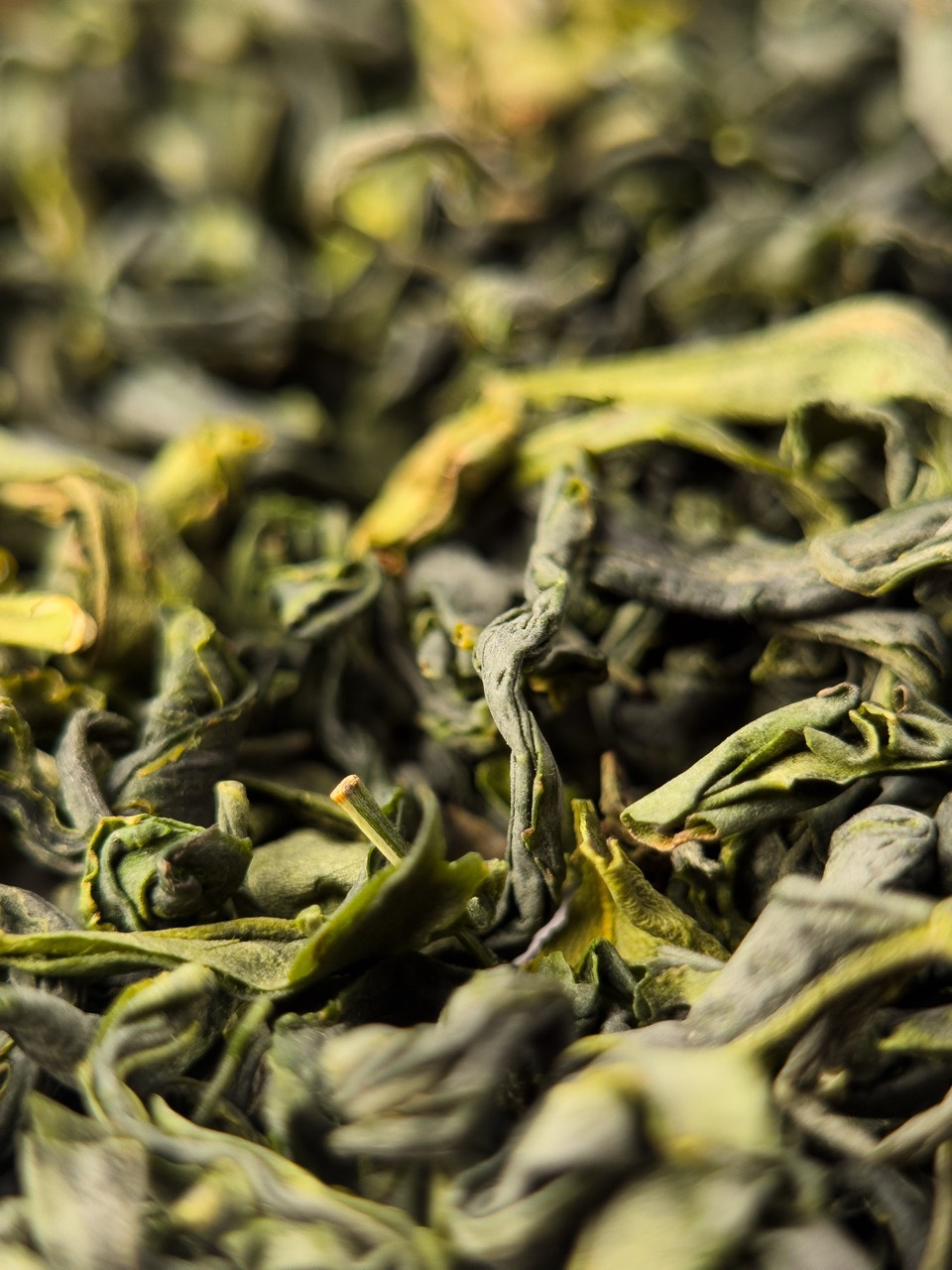
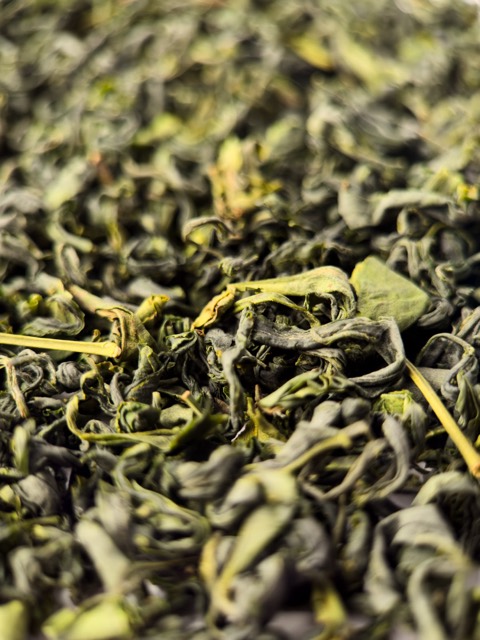
Kamairicha, close up: curled and twisted leaves in deep green and yellow-green, packed edge to edge
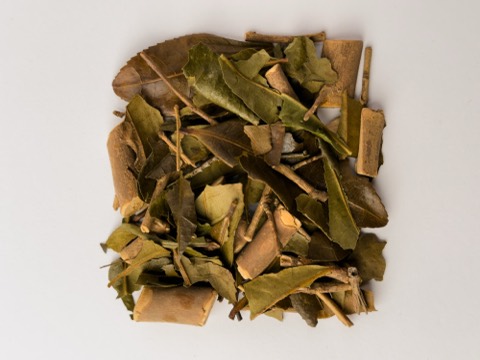
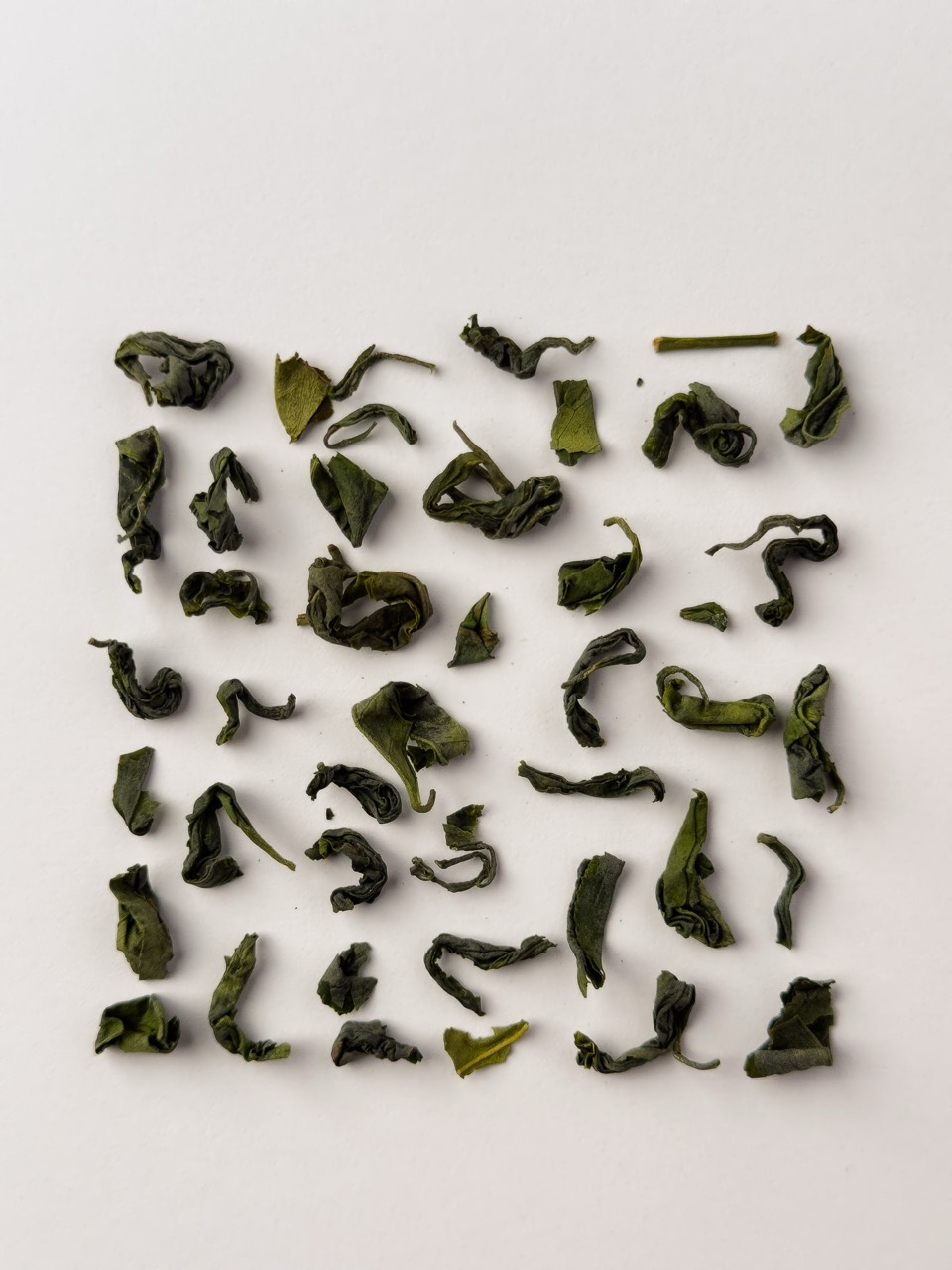
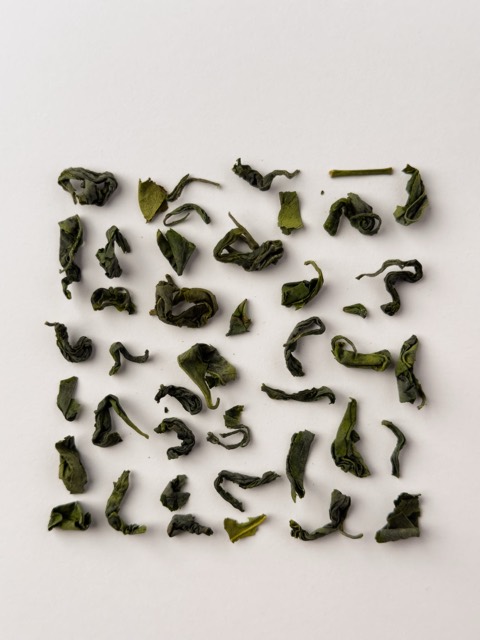
Kamairicha laid out on white paper: dark green leaves, each curled into a hook or a loose roll, with a few flatter, paler pieces and one thin stem
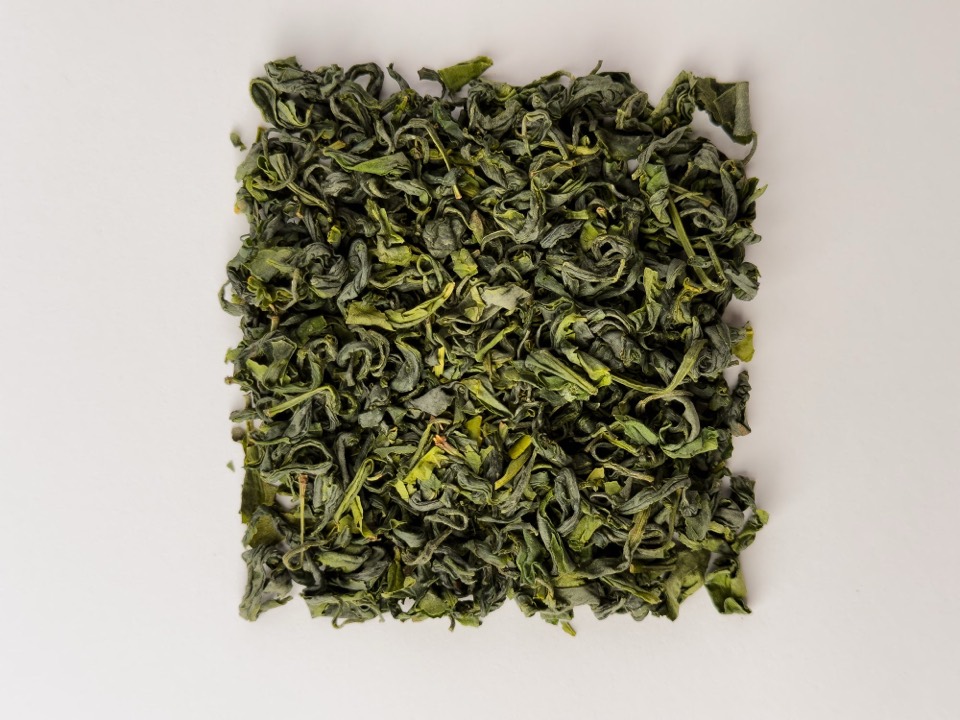
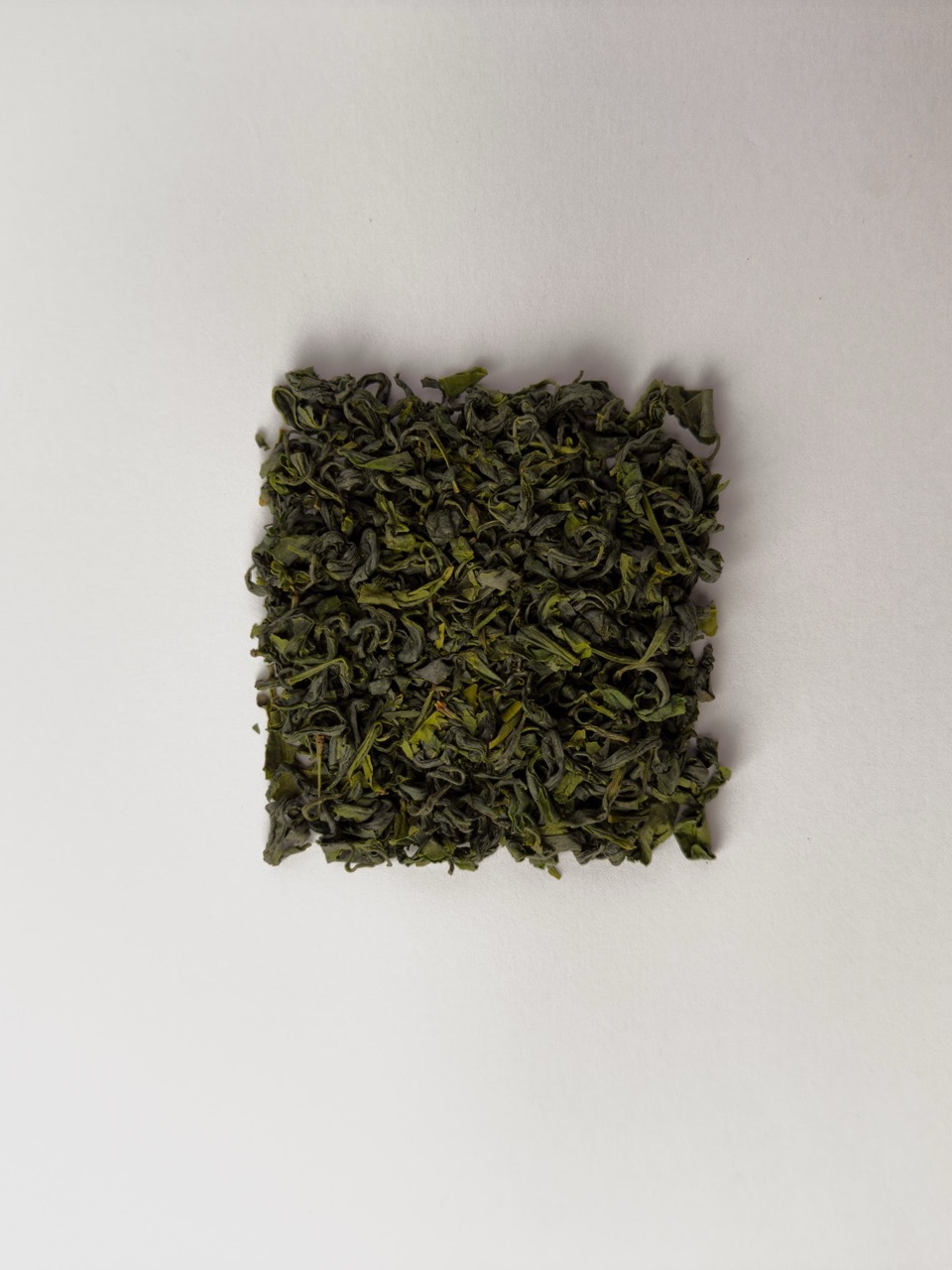
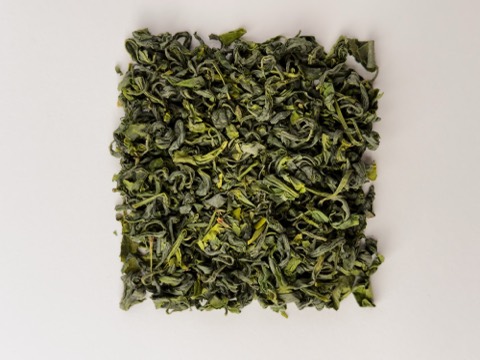
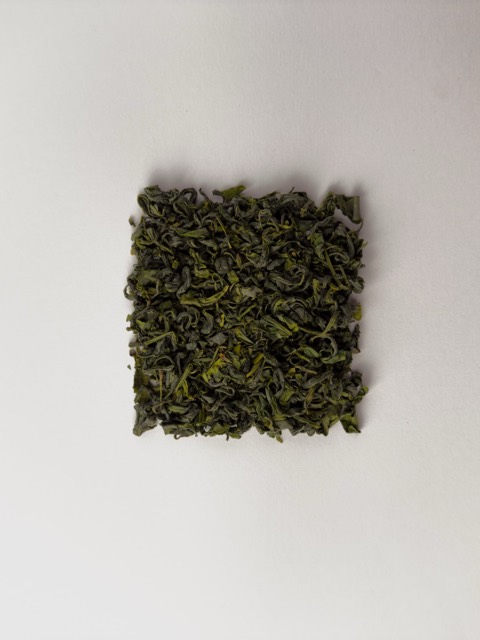
Kamairicha heaped in a small square on white paper: a dense tangle of curled dark green leaves, seen from further away
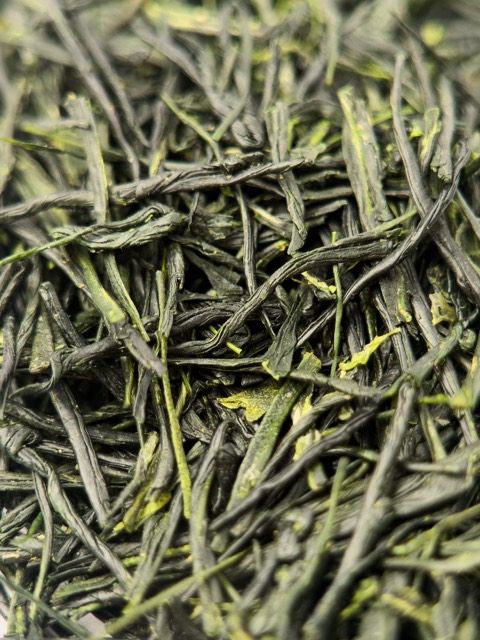
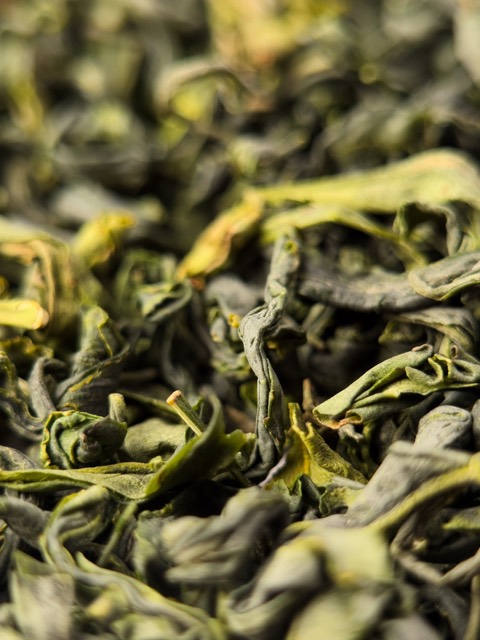
Kamairicha, very close: rolled green leaves in a narrow band of focus, with two pale yellow-green stems running through
Kamairicha, very close: one leaf twisted like a rope at the centre, beside the cut end of a pale stem, the rest soft and out of focus
K·09·K

Kamairicha釜炒り茶

Hot in a pot, or over ice

Pan-fired green tea from Japan, grown by a family tea garden in the mountains of Kyūshū.

Fired in a hot pan, not steamed like most Japanese green tea: a toasty aroma and a clear gold cup. Floral, with umami and a soft roast. The second pour is the most fragrant.

€22 · 50 g · €440 per kg · incl. VAT · plus post · about 8 pots, three pours each

Comes in a heat-sealed bag: once you’ve opened it, it can’t be returned.

Food information

Posted within two working days. Germany €4.90, free from €69 · EU €14.90, free from €99.

  • Card, Apple Pay, Google Pay, PayPal or Klarna, on Stripe.
  • From our tea bar, Kopenhagener Str. 16, Berlin. Taste it there first, or write to us: one of us answers by name.
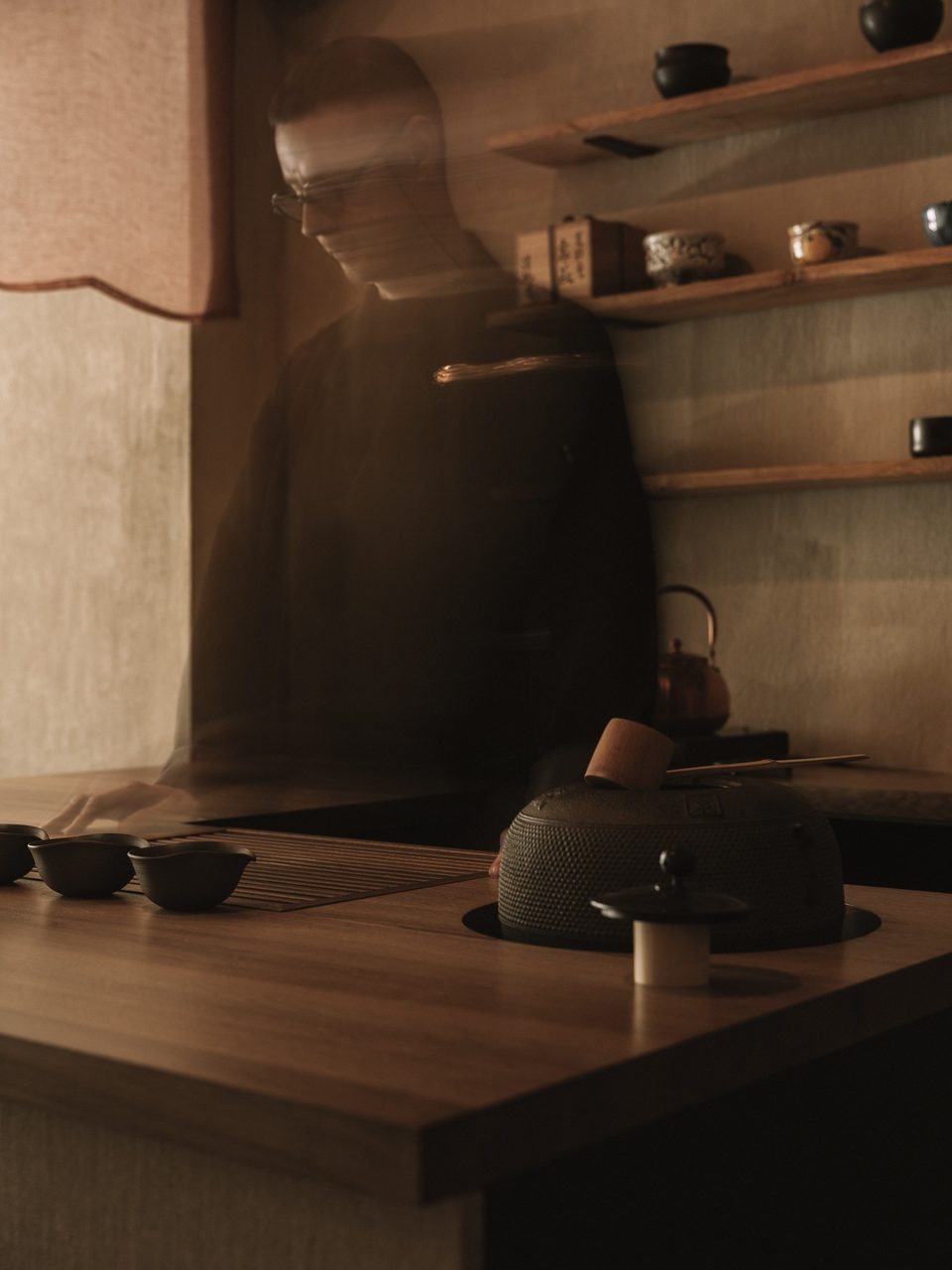
Marcin behind the counter at Kissabō, in motion
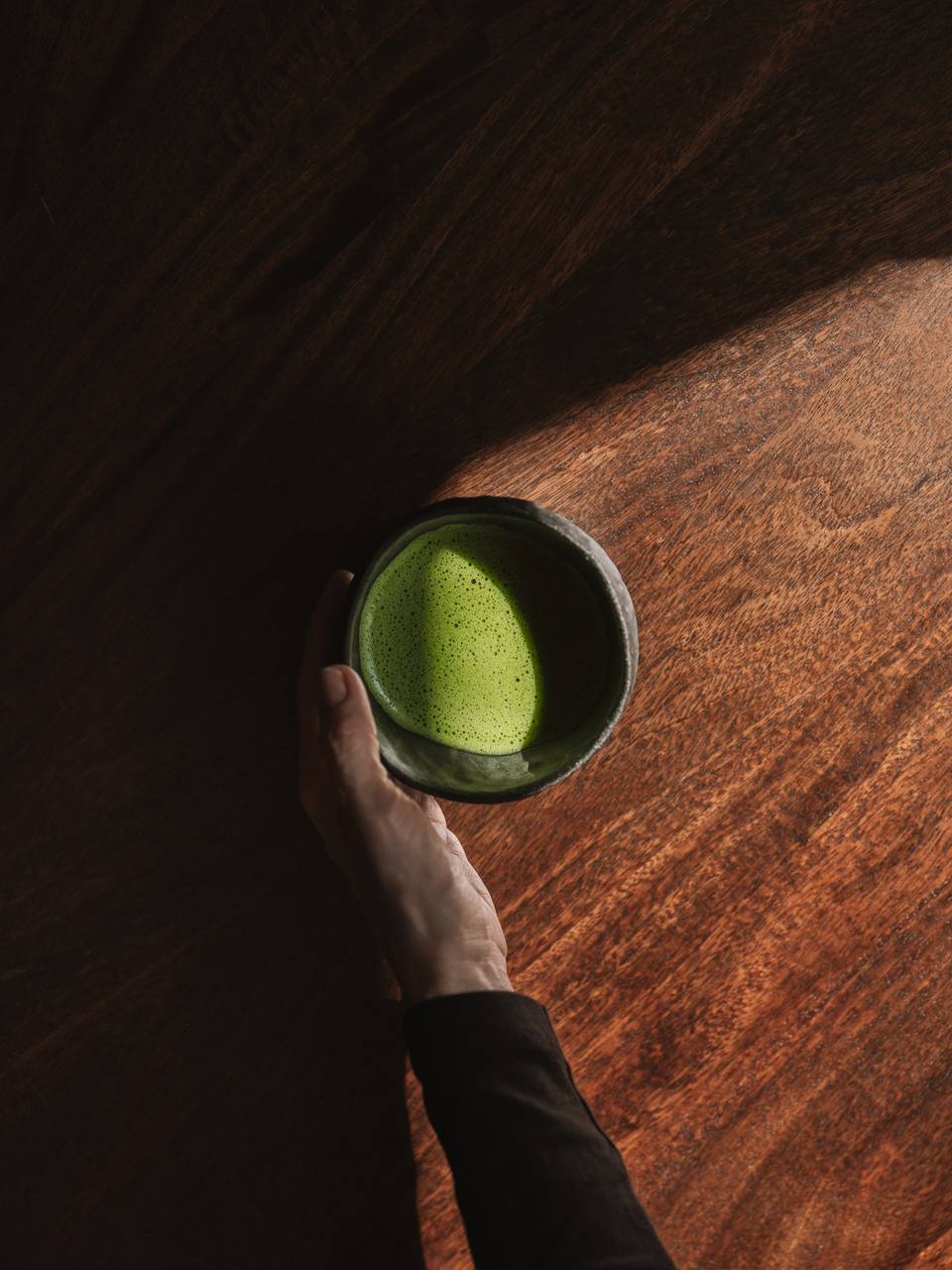
A hand holding a bowl of whisked matcha on the dark wood of the counter
Who picks your tea

Gosia and Marcin.

The two of us run Kissabō, a tea bar in Prenzlauer Berg. Every tea in the shop is one we pour there. Ask for the kamairicha, and it comes in a teapot, three pours to the pot. It is also the first of the three drinks in our Signature set.

The bar · Wed–Sun 14:00–18:00 →

★ 4.7 · 150+ reviews of the bar on Google (opens Google Maps)

Google reviews of our bar in Berlin; we don’t check who wrote them.

“A completely unique hospitality offering.”

Ignant

How to brew it

Kamairicha, very close: one leaf twisted like a rope at the centre, beside the cut end of a pale stem, the rest soft and out of focus

In a teapot急須

Three pours from one pot of leaf.

Leaf
6 g
Water
180–200 ml
First pour
85 °C · 1 minute
Then
Boiling · 30 seconds, twice
The steps
  1. Put 6 g of leaf in the pot.
  2. Pour on 180–200 ml at 85 °C. Leave it 1 minute.
  3. Pour it all into the cups, to the last drop.
  4. Twice more: boiling water, 30 seconds, then every drop into the cups.

The leaf gives up its taste slowly, so the second and third pours still have something to give.

Over ice冷茶

Brewed hot, poured over ice.

Leaf
6 g
Water
180–200 ml · 85 °C
Time
1 minute
Then
Over a glass full of ice
The steps
  1. Brew a pot as above: 6 g, 180–200 ml, 85 °C, 1 minute.
  2. Pour every drop straight over a glass full of ice.

Our suggestion: serve it in a wine glass.

What you need, and the water

The watersoft is best: filtered, or a soft still bottled one. Berlin’s tap water is hard, and hard water changes the taste. Very hard, alkaline water can also brown a green tea.

What you needa teapot with a strainer, or a cup and a fine sieve; a kettle you can set to 85 °C, or a thermometer; a small scale for the 6 g; a glass and ice for the iced pour.

Before you ask

Before you ask

What is kamairicha?

Green tea fired in a hot pan instead of steamed, then pressed, rolled into curls and dried. The pan runs above 300 °C, and the leaf is kept moving so it does not scorch. The toasty aroma the pan gives has its own name, 釜香 kamaka, and the cup is a clear gold. It is not oxidised like an oolong: it is a green tea. It was once made all over Japan. Now almost all of it comes from Kyūshū, and it is estimated at under half a percent of Japan’s tea.

Will it taste bitter?

A little: it is green tea. Bitterness is a taste, and astringency, the drying feel, is a different thing. In a study that made kamairicha and sencha (Japan’s everyday steamed green tea) from the same leaf, a taste sensor rated the kamairicha less astringent, with no clear difference in umami (the savoury taste). The grower calls it less bitter as well. Keep to the time and pour every drop into the cups. Don’t keep brewed tea hot for long: green tea held hot for hours turns yellow and grows more astringent.

Is there caffeine?

Yes. It has not been measured for this tea, so here is an estimate and what it rests on. Japan’s food tables put sencha leaf at 2.3 g of caffeine per 100 g, and a 2012 study found kamairicha leaf holds as much. If all of it came out, the 6 g in a pot would give about 140 mg, shared over three pours, not evenly. Leaf varies from lot to lot, so take this as a guide, not a limit.

How long does it keep?

Unopened, until the best-before date on the bag. Once it is open, moisture does the most harm, and green tea’s taste fades noticeably in about a month. Keep the bag sealed and dry, and use it within a month of opening.

Can I drink it cold?

Yes. Brew it hot and pour it straight over a glass full of ice: the recipe is above.

Can I come and taste it first?

Yes, while it is on the card: ask for the kamairicha. Kopenhagener Str. 16, Prenzlauer Berg, Wed–Sun 14:00–18:00.

Where it comes from

Where it comes from

Made forHot in a pot, or over ice
GrowerMiyazaki Sabō 宮﨑茶房, the Miyazaki family
PlaceGokase, Miyazaki, Kyūshū
CultivarNagomiyutaka, a single cultivar
HarvestFirst flush, picked by hand
MadeFired in a hot pan, rolled and dried; not steamed
Size50 g · about 8 pots, 6 g each
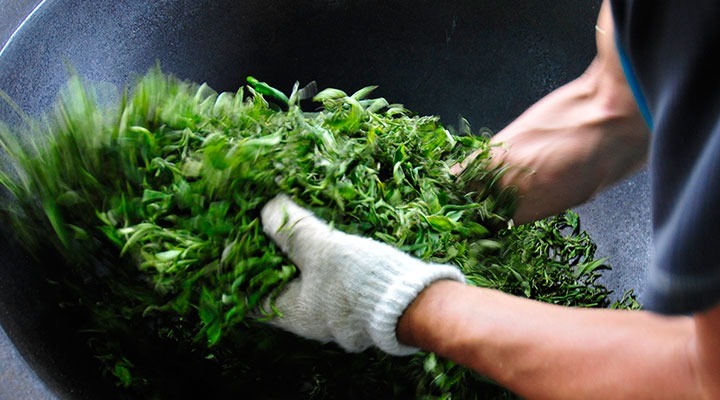
Hands turning fresh tea leaf, at the garden in Kyūshū
Who grows it · 畑

The Miyazaki family,
Gokase.

Miyazaki Sabō 宮﨑茶房 is the Miyazaki family’s tea garden in Gokase, in the mountains of Kyūshū. Akira Miyazaki runs it today. They grow 29 cultivars on 14.8 hectares and do it all themselves, from growing the tea to selling it: mostly kamairicha, with oolong and black tea. All three of our leaf teas come from there.

Our kamairicha is their hand-picked Nagomiyutaka: first flush, fired in a pan, not steamed.

The garden’s record

  • 2025Prime Minister’s Prize (内閣総理大臣賞) at Japan’s Agriculture, Forestry and Fisheries Festival (農林水産祭), for the farm as a whole. Source
  • 2017Platinum Award (プラチナ賞) at the Nihoncha AWARD (日本茶AWARD), for the garden’s kamairicha. Source
  • 2016Agriculture Minister’s Prize (農林水産大臣賞) at Japan’s National Tea Competition (全国茶品評会), kamairicha class, for the garden’s kamairicha. Source (PDF)
  • 2002Emperor’s Cup (天皇杯) at Japan’s Agriculture, Forestry and Fisheries Festival, for the family’s farm as a whole. Source (PDF, 63 MB)

The garden’s prizes, by year. None was given to the harvest in this bag.

The year in this tea

The year in this tea

春

Spring

Hot, in a teapot: three pours from one pot of leaf.

夏

Summer

Brewed hot and poured over ice. At the summer solstice we poured it cold, with tokoroten (thin agar noodles).

秋

Autumn

On our autumn card: a teapot, three pours.

冬

Winter

Hot, with dumplings and rice: our suggestion.

The other teas

Yoi宵

Start hereWater, or milk without sugar

from €35 · 20 g · €1,750 per kg · also 40 gincl. VAT · plus post

Food information

Food information

NameKamairicha, green tea, loose leaf
Net quantity50 g, in a heat-sealed bag
OriginJapan (Gokase, Miyazaki)
StorageStore cool, dry and dark. Once opened, keep it airtight and use it within a month.
Best beforeOn the bag, with the lot number
Food business operatorKISSABŌ Chelkowska und Chelkowski GbR, Kopenhagener Straße 16, 10437 Berlin, Germany
Kamairicha釜炒り茶 €22 · 50 g€440 per kgincl. VAT · plus post